A Leipzig brand that now sits inside a Munich pet platform
Wolfsblut is not a supermarket own-label with a wolf on the bag. Healthfood24 GmbH was founded in Leipzig in 2005 by Felix Becker as a grain-free, high-meat complete food sold through specialist shops and online. The brand site dates its quality claim to 2006. In January 2020, Munich-based AlphaPet Ventures acquired Healthfood24 and folded Wolfsblut into a digital brand platform that already ran shops such as petspremium.de. You are buying a premium German recipe set with corporate distribution and a public shop at wolfsblut.com, not a one-person garage mill and not a veterinary drug company.
The marketing line is genetic: the company says a domestic dog still carries about 99 percent wolf, so recipes should look like a wolf’s diet rather than a cereal biscuit. The practical translation is simpler. Meat or fish is the main component. Grain and gluten are left out. Fruit, vegetables, and nutrient-dense extras fill the rest. Production is described as taking place in the EU to IFS food-industry standards. Conventional meats are said to come mostly from EU-certified livestock; unusual proteins such as game, ostrich, kangaroo, or camel come from selected partners. The company also states that no animal is raised only to become Wolfsblut.
Original, Limited Ingredients, and VetLine are not the same bag
The live range splits into three buying decisions. Original is the flagship dry food, wet food, and snack set: grain-free, meat- or fish-forward, with named recipes such as duck, lamb, horse, and fish lines. Limited Ingredients is a narrower dry food: a maximum of nine ingredients, one animal protein, and a Rainbow Blend of seven fruit and vegetable components. VetLine is dietetic complete feed, developed with veterinarians, produced in Germany, and aimed at diagnosed problems. Specialist listings describe seven sorts covering gastrointestinal, skin, hypoallergenic, renal, weight-management, joint-care, and urinary use-cases. You do not pick those from a flavour whim.
Grain-free is a formulation choice, not a medical certificate. Most healthy dogs can digest properly cooked cereals; some do better without them if a vet has linked a grain to an intolerance. Wolfsblut leans on the wolf-does-not-hunt-wheat argument. That is branding. Read the analytical constituents on the bag you hold, match calorie density to weight and activity, and change food over about a week. If your dog has chronic gut disease, kidney values, or a suspected food allergy, VetLine and Limited Ingredients are conversation starters with a veterinarian. A hydrolysed hypoallergenic recipe is a clinical tool. An Original kibble with an exotic protein is still a complete pet food, not a prescription.
- Grain-free complete foods with meat or fish as the lead ingredient, plus fruit, vegetables, and extra nutrient sources
- Original dry, wet, and snack recipes spanning common and less common proteins, including several fish lines
- Limited Ingredients dry food with a maximum of nine components and one animal protein
- VetLine dietetic complete feeds made in Germany for specific diagnosed conditions after veterinary advice
- EU production described under IFS food standards, using food-industry meat rather than purpose-killed livestock
- Sold on wolfsblut.com and through specialist retail under AlphaPet, not as a supermarket exclusive
Proteins, “superfoods,” and how to read a bag without the poetry
Protein variety is the catalogue’s real feature. Duck, lamb, horse, and fish recipes let you rotate or isolate a source if a vet is running an elimination plan. Exotic listings exist because some allergic dogs do better on proteins they have never eaten; they are not automatically better meat. Horse as a single animal protein is a monoprotein tool. Fish recipes are often chosen for palatability and fatty acids. Whatever animal is on the front, the back panel still lists moisture, protein, fat, fibre, and ash. If one bag is far denser, your scoop size must change or you will overfeed.
The brand adds plant extras and talks about the absence of artificial colours, flavours, and extra preservatives beyond essential vitamins and minerals. That is a premium-position claim, not a proof that the food treats disease. Puppy, adult, and size-or-activity variants exist because a growing giant-breed skeleton and a sedentary senior are not the same calorie problem. Use the feeding table as a starting band, then weigh the dog every two weeks after a switch. Stools, itch, and ear gunk are better feedback than a wolf silhouette. If itch explodes after a new protein, stop and call the clinic rather than adding a second novel meat the same weekend.
Read the current recipe pages for Original, Limited Ingredients, or VetLine, and match the protein to what your veterinarian has actually asked for.
Open Wolfsblut →Grain-free caveats, DCM headlines, and why your vet still gets a veto
Between 2018 and the early 2020s, regulators and cardiologists spent public ink on grain-free diets and dilated cardiomyopathy in dogs. The evidence never settled into a single banned ingredient list. The honest takeaway is narrower: grain-free is not automatically safer, legumes and potatoes in large amounts are a reason to read the ingredient order, and heart questions belong with a vet, especially in breeds already prone to cardiomyopathy. Wolfsblut’s wolf story does not cancel that literature. Complete feeds should still meet FEDIAF-style nutrient profiles for the life stage on the label. Marketing cannot override a blood panel.
VetLine needs an even slower hand. Gastrointestinal, renal, urinary, and hypoallergenic dietetic foods are positioned for particular nutritional purposes. Using a renal diet on a healthy dog wastes money and can unbalance calories. Weight-management recipes only work if the household stops extra snacks. Joint-care and skin recipes sit alongside medication, not instead of it. Mixing random wet Original tins through a VetLine dry ration can wreck the nutrient math. Transition slowly. Keep the old food for a week in case the new one is refused. Photograph the batch code if you later need to talk to the manufacturer or a retailer.
Wolfsblut is a serious grain-free recipe house with a real VetLine. It is not a licence to skip the veterinarian, and the wolf percentage on the homepage does not diagnose an itchy ear.
— Noah Bennett
Where to buy, how to switch bowls, and what “premium” does not include
You can order from wolfsblut.com or pick bags in German-language specialist retail and selected online pet shops. Specialist shops are useful when you want to see kibble size. The brand site is useful when you want the full recipe tree. Prices move with bag size, protein, and retailer promotions, so this review will not invent a euros-per-kilo figure. Compare cost per 1,000 kilocalories, not cost per bag. A dense 12-kilogram sack can be cheaper to feed than a pretty 2-kilogram trial. Ignore third-party listings that cannot show a German or EU batch trail.
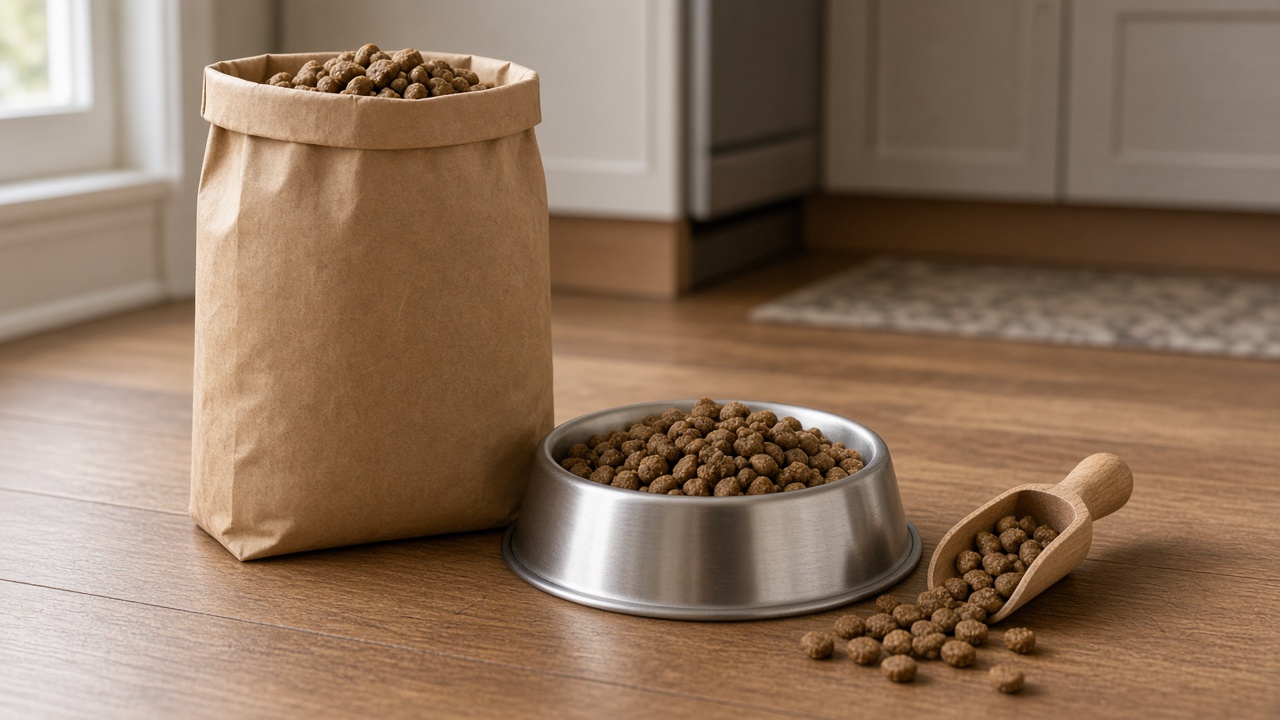
A switch protocol is dull and it works. Keep total calories roughly constant. Mix 25 percent new food for a few days, then 50, then 75, unless a vet has told you to go faster for a medical diet. Offer water. Expect softer stools for a short window. If vomiting repeats, stop. Puppies and dogs on pancreatic or renal plans should not be used as recipe testers. Snacks count: subtract treats from the daily ration. Store dry food sealed and finish opened wet trays on the timetable on the label. None of that is unique to this brand. All of it decides whether a premium recipe looks like a premium result.
- Get a current weight and a body-condition score before you change calorie density
- Read whether the SKU is complete feed, dietetic complete feed, or a complementary snack
- Match protein to history: novel or hydrolysed only when a vet is investigating intolerance
- Transition over several days and keep the previous bag until the new one is clearly tolerated
- Calculate cost per 1,000 kcal and subtract treats from the feeding table
- Do not run a renal, urinary, or hypoallergenic VetLine recipe without a diagnosis
FAQ: wolf genetics, grain-free, VetLine, and exotic meats
Does every dog need grain-free food because of the 99 percent wolf line?
No. Dogs are not wolves in a collar, even if much of the genome is shared. They have lived on human leftovers for millennia and many thrive on complete foods that include rice or other cereals. Grain-free is justified when a specific grain is a problem, when a vet prefers that carbohydrate mix, or when you simply want this recipe style and the dog maintains a good weight and stool. It is not justified by a percentage on a homepage. If a dog already does well on a grain-inclusive food, switching only for branding is optional. If a dog has pancreatitis, kidney disease, or heart disease, the clinic’s diet sheet beats any wolf metaphor.
When should I use VetLine instead of Original?
Use VetLine when a veterinarian has named a condition that a dietetic feed is designed to support: a food-responsive gut, a diagnosed allergy work-up, chronic kidney disease, struvite management, or medically significant overweight. Original is a maintenance-style premium food for dogs that do not need that framework. Limited Ingredients sits in between for suspected sensitivities without a full clinical diet. Do not stack three lines in one bowl. Ask how long the dietetic period should last and what bloodwork closes the loop. Produced in Germany is a plus for traceability; it still does not make the food a medicine.
Are kangaroo or camel recipes automatically hypoallergenic?
No. A rare protein only helps if the dog has not already been exposed to it and if the rest of the recipe is clean enough for an elimination trial. Limited Ingredients, with one animal protein and a short plant list, is the more honest elimination tool in this catalogue. Exotic meats also have palatability quirks; some dogs simply refuse them. The company says unusual proteins come from selected partners under welfare rules. Your job is to buy from a retailer that can take a bag back if the lot is wrong, and to stop a trial if vomiting or hives appear. Hypoallergenic in the VetLine sense usually means hydrolysed protein, which is different from “the animal is uncommon.”
Open the recipe that matches life stage and protein history, then confirm complete-feed versus dietetic status before you empty the old bin.
Compare Wolfsblut recipes →Verdict for owners who want a German grain-free kibble
Wolfsblut remains one of the clearer German premium grain-free lines: high meat or fish, named recipes, a short-ingredient spin-off, and a veterinary diet range actually produced in Germany. AlphaPet ownership explains why you will see it both on the brand site and in specialist aisles. Buy it if your dog thrives on that style and you are willing to weigh scoops. Skip the wolf poetry if you needed a clinic renal food from a different house, or if grain-free is a fashion choice your cardiologist has already vetoed. Read the bag, not the howl.