Yes. Wiesbaden is a workshop you can look up
Your friend texted a configurator screenshot and asked if SchattenFreude is legit. It is. Reiki Home Craft GmbH sits at Adolfstraße 1, 65185 Wiesbaden, represented by Alexander Reiswich, filed as HRB 33823 at Amtsgericht Wiesbaden, VAT ID DE357878386. The imprint also lists +49 15679 490200, info@schattenfreu.de, and WhatsApp 015678 5900 35. That is a German address you can read out loud, not a marketplace ghost with a stock photo of folds. I still would not treat the homepage render as a promise that your living-room sash will match the picture. The workshop builds the millimetres you type. The typed number is the product.
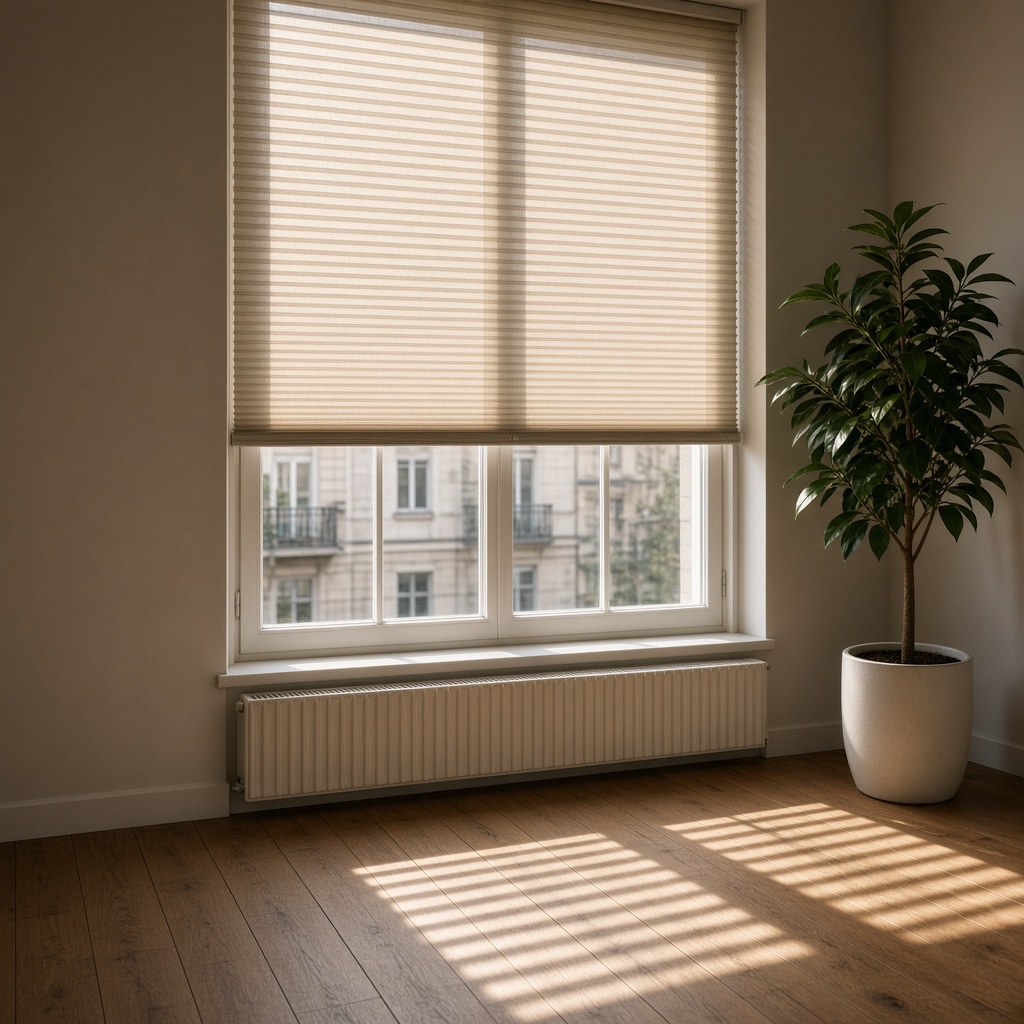
They make window hardware to order, not curtains you hem on a Saturday. I am only going to name two cloths, because the rest of the range is the same decision in a different thickness. Classic Plissee is the translucent fold that keeps street-level privacy while daylight still gets through; listing cards have started near thirty euros, and that is a starting width, not your balcony door. Thermo-Wabenplissee is the honeycomb with a heat-oriented core, sold as the darker option, often from about thirty-six euros on a card. Cassette rollers and side-guide rails are mounting stories, not a third fabric to memorise. Custom pieces are described as two to four working days, then a parcel. Free cloth samples exist if your monitor is lying about beige.
Sunday tape, two languages, one unforgiving cut
Here is where I got stuck the first time I tried to help someone order. On a Sunday, in a hallway already stacked with moving boxes, we measured the kitchen sash, wrote the number on a receipt, then cloned it onto the bedroom because the windows “looked the same.” They were not. One bead had been replaced in a renovation. The handle sat higher. The rubber gasket on the tilt-and-turn was shallower than it looked from the sofa. A metal tape would have saved the afternoon. A rounded centimetre would not. The shop accepts millimetre input, and it will build the window you described, including the wrong one.
There are two measuring languages, and mixing them is how a custom order goes limp at the glass. Bead mount means you tape the pane plus the rubber gasket, width and height. The workshop then knocks three millimetres off the width so the fold can drop without scraping. You do not knock those three millimetres off yourself unless the live form says so. Doing it twice is how you buy a stripe of daylight. Sash mount means full sash height, and width equal to the glass plus a four-to-six-centimetre overhang so light does not leak at the sides. Clamp kits and adhesive kits speak sash. Screw-in bead kits speak glass-plus-gasket. Pick one language and stay in it.
Treat every sash as a stranger. Old wooden frames lie. New PVC beads lie in a tidier way. Note how far the handle sticks out so the rail does not kiss it every time you tilt. Note whether the rubber lip is deep enough for a clamp foot and whether the rear arm has space behind the sash. If the window never opens, glue-on side rails or a cassette stuck in the bead may be the honest path. If the lease forbids holes in PVC, you are shopping clamps and glue, even when the screw-in option looks cleaner in photos. The catch: a landlord who smiled at “no drill” still cares if a clamp chews the rubber.
- Bead mount: tape the pane plus the rubber gasket; the shop trims three millimetres from width so you should not
- Sash mount: full sash height, then glass width plus four to six centimetres of overhang to kill side glow
- Write millimetres, not rounded centimetres, and write a fresh pair for every sash
- Check handle protrusion and rear clearance before you commit to a clamp
- Fixed lights that never open often want adhesive rails rather than a clamp with nothing to bite
- Honeycomb cloth needs a little side air; the maker warns about thermal glass if the fold sits too close
Choose bead or sash first, type the numbers once, and request free cloth samples if the colour has to sit next to a wall you already painted.
Open the configurator after you have millimetres →Who should buy a millimetre cut, and who should walk
This shop is for owners and tenants in Germany and the listed EU countries who will stand at each window with a metal tape, who want a Wiesbaden imprint instead of an anonymous parcel, and who can live with a personalised size killing the ordinary change-of-mind return. It is for the person who already knows bead from sash, or who will learn it before paying. It is for someone who will order samples when the wall is already a fussy warm white. It is not for the person who wants a standard size they can walk back to a DIY chain on Monday.
Skip it if you need a restockable width, a roof specialist shape, or a drill-free promise on a gasket that cannot hold a clamp. Skip it if you live on an island the shop will not serve. Skip it if a landlord demands a documented kilowatt-hour saving rather than a thicker cloth. I think the cleanest walk-away is the renter who cannot mark the bead and whose sash is too shallow for a clamp. That person is not failing at shopping. They are in the wrong aisle. A tension rod and a ready-made fold you can send back will cost less regret than a custom miss you hide behind a plant.
- For: DE and listed-EU window owners who will measure each sash and accept that a custom size ends ordinary returns
- Skip: anyone who needs a standard restockable size, a roof or radius specialist, or a no-drill guarantee on a bad gasket
- Skip also on an excluded island, or if you need a published energy certificate rather than a comfort cloth
- Postage band, Germany: described as free on the shop’s own language
- Postage band, listed EU destinations: about sixteen euros, on top of production time
- Postage band, islands: not served, so do not assume a ferry will fix that
- Order samples when colour has to match paint; photograph gaskets if clamp fit is a guess
What checkout actually asks you to decide
Buying is not a colour-first stroll. You pick a mount type, then you type width and height in millimetres, then you pick a cloth family and a rail colour. Hardware in that rail colour is usually bundled; you should not be surprised by a separate holders line if the form already included them. Wider folds over about one hundred and twenty centimetres often get two operating handles so you are not twisting one plastic tab across a bay. Plissees typically run free-hanging, top and bottom rails. Cassette rollers use a chain. None of this is a thirty-second unfold. You still need a ladder, a spirit level, and a degreased PVC face if you chose adhesive.
Samples should travel before a whole-flat order if the beige has to live next to a painted wall. Phone hours have been described as nine to eighteen, with a call-back if you miss the team. WhatsApp is the practical line for a side-on gasket photo before you click pay. German prices include VAT; freight lands at checkout. Starting cards around thirty or thirty-six euros are not your balcony door. Quantity language toward twenty percent at high goods value can tilt a whole-flat order, but labour is still yours unless you hire a fitter. The shop ships cloth and aluminium. It does not send an installer.
Enter bead or sash millimetres once, skip a homemade second deduction, and add only the mount kit your frame can actually hold.
Configure one window, not a guessed flat →Clamps, glue, and the landlord’s bead
No-drill mounting exists here, and it is not marketing fog. Metal or plastic holders pinch a sash when the gasket and the geometry allow it. Glue-on aluminium side channels stick first, then carry the fold; the shop leans on that path for lights that never open and for darker edges. Cassette rollers can sit in the bead with adhesive, ride the sash, or get screws into wall or ceiling when a sash pinch is the wrong tool. After a week of daily tilting, a clamp can walk. After an August afternoon on a south pane, adhesive can let go. That is physics, not proof the workshop packed the wrong colour. Follow the mount card in the box.
A drill is still the tidy answer when holders slip, when the sash is chunky, or when you want the bead install that almost disappears. The form is blunt: screw-in bead mounting looks neat, and it needs holes. Listed-building rules and many leases forbid those holes. Tenants should photograph the bead before and after. Roof lights and odd radii belong to the window maker’s own specialist blinds, not to a shop that cuts rectangles. A clamp that scars rental PVC is a deposit fight. A screw in a bead can be a louder one. Choose with the lease on the table, not with the prettiest photo.
The return page is honest. That is the relief.
Personalised plissees and rollers sit outside ordinary returns when they do not fit, because they cannot go back on a shelf. German distance-selling practice treats cut-to-size goods that way, and the shop repeats the sentence on the custom pages. I was irritated the first time I saw a sixteen-euro EU freight line next to a “free in Germany” promise (then relieved, honestly, that the no-return language sits in plain view instead of in a footnote you find after the parcel arrives). Stock accessories and sample packs are a different bucket. A fourteen-day withdrawal can apply to warehousable bits, with the customer paying return freight. Third-party listings have given a returns address as Jahn Krieger, Nockenweg 22, 51647 Gummersbach Hardt. Confirm the live terms before you post anything.
Once the workshop has cut the numbers you entered, a fit complaint is already over. What still has a conversation attached is a manufacturing fault, a cloth that does not match the ordered code, or a carton smashed on the way, photographed the day it lands. Keep the packaging until rails and fabric match the order. A silent parcel back to Wiesbaden will not restart a custom cut. Email and photos will. A measuring miss is a second order, or a closet door that suddenly has a fold.
The product is the measuring rule, not the cloth. Bead width gets a three-millimetre factory trim; sash width wants a four-to-six-centimetre overhang. Skip the tape and you should be in a DIY aisle, buying something restockable.
— Marcus Chen
Postage in words, islands, and a 27 September 2026 check
Domestic German shipping is described as free. Listed EU destinations such as Austria, Benelux, Czechia, Hungary, Slovakia, Bulgaria, Croatia, the Baltics, Greece, Romania, and Slovenia have sat near sixteen euros on quotes we opened. German and foreign islands are excluded, and the exclusion is easy to miss if you only read the “EU” headline. After you pay, German transit is often two to four days and foreign five to seven, stacked on the two-to-four working-day production window. Prepaid custom work clocks from payment. That stack is why a homepage “few days” can still mean a calendar week and a half at the door. The firm does not have to sit with a consumer arbitration board. An EU online-dispute link sits in the imprint for form’s sake.
On 27 September 2026 I checked the public pages again. A lifetime fabric warranty was still unpublished. A stated percentage off a heating bill was still unpublished. A clearly priced next-morning custom cut was still unpublished. Assume those things do not exist until a live page says otherwise. Insulation here is comfort and glare control, not an energy-authority certificate. If a landlord wants paperwork, save the current listing and the imprint. If you need darkness for shift sleep, hold a honeycomb sample in that bedroom after dusk before you order four bays.
Limits the shop will not fix for you
A free-hanging fold leaks at the edges. Street LEDs find every millimetre you were optimistic about. Side guides and a generous sash overhang darken more than a classic translucent cloth ever will. Some so-called blackout weaves still glow navy rather than void. Thermal glass can suffer if a sealed honeycomb sits too close and heat has nowhere to go; leave the air path the maker talks about. Adhesive on a hot south pane can fail in summer. Clamps can mark a sash. Screw holes in a bead can be a lease problem. Odd shapes, roof lights, and radius windows belong to specialists. Islands are off the map. A custom miss is yours.
Questions people ask before they pay
Can I send back a fold that misses the pane by a finger width?
Not as a change of mind, and not because the size is wrong. Cut-to-order cloth is unique, so a miss does not travel back as a normal return. An eight-millimetre stripe is usually your tape or your mount choice, not a loom fault. If you typed bead width and the shop already trimmed three millimetres, that stripe may be the trim doing its job plus a kitchen-table error. Order again with the right pair. Keep the too-narrow fold for a smaller opening or a closet if it still works. Wrong cloth versus the order, missing rails, or a destroyed carton go to info@schattenfreu.de with photos.
Do I subtract the three millimetres myself at checkout?
For a bead mount, no, unless the live configurator explicitly tells you to. You tape glass plus gasket and type that pair. The workshop takes three millimetres off the width so the fold can sit without scraping. Subtracting at the kitchen table and then letting the shop subtract again is the classic gap. For a sash mount there is no three-millimetre factory trim in that sense; you add the four-to-six-centimetre overhang yourself because side light is the problem you are solving. If you are unsure which mount you picked, stop and look at the option name before you pay.
Will a clamp stay put on a daily tilt-and-turn?
Sometimes, when the rubber profile is right and the rear hook has somewhere to go. Sometimes not, when the sash is flush, blocked by metal inside, or so shallow the holder chews the gasket. The configurator cannot see that from a dropdown. Send a side-on photo on WhatsApp before you commit four bedrooms to clamps. Windows that barely open are often happier with adhesive rails. Windows you tilt every morning need a first-week watch. A walking clamp is cheaper to catch early than after it has scarred the PVC. One test window is the grown-up order, even if the rest of the flat is waiting.
Does the honeycomb actually make a bedroom dark?
Thermo-Wabenplissee is sold as light-blocking cloth with a heat-oriented core. Real bedrooms still glow at the sides unless you add guides or a generous sash overhang. A cassette with side channels usually darkens more than a free-hanging Classic Plissee. Hold the sample at night in the room you will sleep in. Some weaves still glow. Honeycomb in a kitchen can make breakfast feel like a cave. The translucent classic on a south bedroom can leave a shift-sleeper squinting. The shop will cut either. It will not argue with the room.
How long from typed millimetres to a carton in the hall?
With numbers already in hand, cutting is usually two to four working days, then another two to four days of German parcel time on the shop’s usual wording. Plan on one to two weeks at the door unless a holiday sits in the middle. Samples before a whole-flat order add a postal round trip. A rush cut faster than that published band was unpublished on 27 September 2026, so do not count on a next-morning piece. Addresses outside Germany add the about-sixteen-euro freight and the longer five-to-seven-day transit quote. Islands stay off the map. If a tradesperson is due Friday, tape the sashes the Monday before, not Thursday night.
What does the freight line look like if I am not in Germany?
Inside Germany, postage is described as free. On the listed EU destinations, expect about sixteen euros as a separate checkout line, plus the longer transit quote. If your address is an island, German or foreign, the shop’s own language has been exclusion, not a surcharge you can talk down. Confirm the live checkout before you assume a mainland cousin’s quote applies to you. Payment starts the production clock on custom work. A saved cart does not. If freight is the part that makes the order feel silly next to a DIY-chain tension fold, that feeling is information. Custom wins on odd millimetres. It does not win on a standard eighty-by-one-thirty you could return.
If you are still hovering over the buy button
SchattenFreude is a Wiesbaden workshop with a public imprint, free samples, a short custom cut, German free postage, and a return page that does not pretend custom sizes are restockable. Stay in one measuring language: bead numbers with the factory’s three-millimetre width trim, or sash numbers with a four-to-six-centimetre overhang. Clamps and glue-on rails can skip the drill when the frame cooperates; that is not a universal rental trick. Walk away if you need an island address served, a roof-window specialist, or a beige you can post back after it disappoints you. Measure first. Sample second. Then configure. The workshop will build exactly the window you described.