The USB data port decides more than the product page
Ottocast sells plug-in hardware that sits between a phone and a factory infotainment screen. Company materials trace the brand to 2009 and to Cartizan in Hong Kong, then to wireless CarPlay and Android Auto adapters that appeared around 2019. The live catalogue on ottocast.com mixes thumb-drive dongles, Android boxes sold as OttoAibox and PICASOU, HDMI sticks, and add-on screens for cars that never shipped with CarPlay. None of those gadgets invent a radio protocol. They reuse the handshake the car already has. If a USB data port already launches wired Apple CarPlay or wired Android Auto, an Ottocast unit can occupy that port and talk to the phone over Bluetooth and Wi-Fi. If the socket only charges, no firmware update will invent a missing factory feature.
The thirty-second self-test on the official site is still the cheapest compatibility check. Start the car, wake the factory screen, and plug an iPhone or a supported Android phone into the USB port meant for phone data rather than a charge-only cubby. If CarPlay or Android Auto appears, a wired-to-wireless adapter has a path. Trim packages lie: a 2018 Audi listing may show wired CarPlay on higher trims and wireless-only CarPlay on others. Korean models sometimes need a wired-CarPlay mode flipped in the menus before a dongle will lock. Jaguar owners are told to tap the factory CarPlay icon after plugging in. Those quirks belong in the order notes, not in a review written after the restocking fee is already on the invoice.
Mini dongles, PICASOU boxes, and the i3 BMW lane
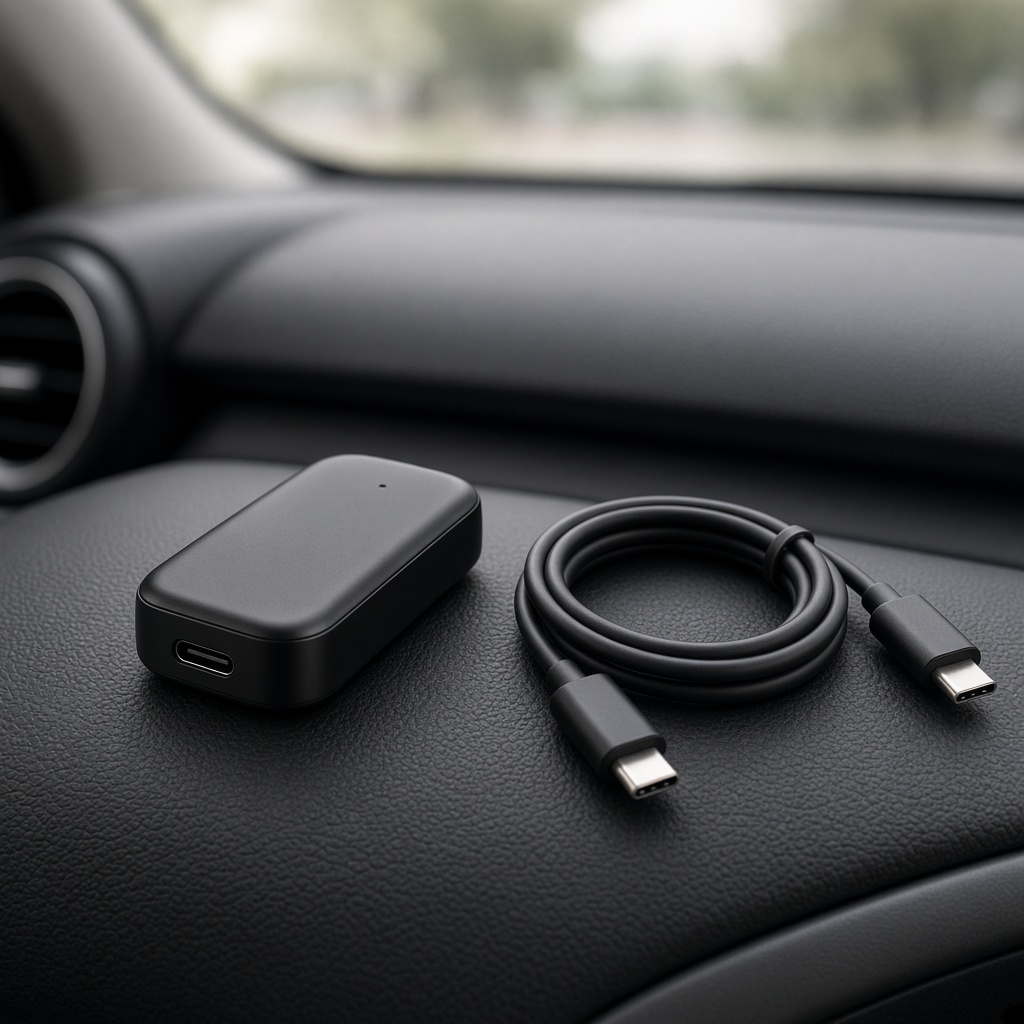
A Mini-class adapter, sold in recent listings as Mini Nova, Mini Aura, or a compact 2-in-1 stick, does one job. It converts factory wired CarPlay or wired Android Auto into a wireless session so the phone can stay in a bag. US sale prices we checked sat near forty-nine to fifty-five dollars. The box typically includes the dongle, a USB-A-to-C adapter, and a short manual. There is no onboard Android desktop and no Play Store. If the phone is not in range, the stick is idle. U2AIR Pro sits in the same family: wireless CarPlay without a second operating system. These are the units to compare if the only complaint is a cable on the center console.
OttoAibox units are a different product. PICASOU 2 was the earlier Android 10 box that plugged into wired CarPlay and switched among Android, wireless CarPlay, and wireless Android Auto. OttoAibox P3, still listed on regional shops as a Picasou-series upgrade, has been sold around one hundred eighty-nine dollars on promotion, with Android 12, 8 GB of RAM, 128 GB of storage, OttoDrive 2.0, FOTA updates, and an optional HDMI bundle. OttoAibox P3 Pro, listed near two hundred nineteen dollars on ottocast.com when we checked, moves to Android 13, a Snapdragon 6225, OttoDrive OS 3.0, HDMI output, and a CloudSIM option. The P3 Pro AI voice pack is sold separately after a trial described as three months or one thousand conversation rounds. Netflix split-screen is explicitly unsupported on that box.
BMW and other factory-wireless-only cars are the usual trap. Pages for P3, P3 Pro, PICASOU 2, and Mini adapters state they are not a match for vehicles that only have wireless CarPlay and no wired USB path. The recommended model in that lane is OttoAibox i3, a BMW-oriented box for extra software rather than a clone of the Mini. Sony aftermarket head units are listed as incompatible across several adapters. Mitsubishi buyers are asked to leave a checkout note or email support before ordering. Cars without any factory CarPlay are steered toward Ottoscreen AI, a plug-in display listed near one hundred sixty-nine dollars on sale. That is a dashboard project, not a five-minute USB stick.
- Mini / Mini Nova / compact 2-in-1: wireless CarPlay and Android Auto only, typically under sixty dollars on sale
- U2AIR Pro: CarPlay-focused wireless adapter in the same dongle class
- PICASOU 2: older Android 10 AI box for wired-CarPlay vehicles, not BMW, not Sony aftermarket
- OttoAibox P3: Android 12, 8 GB RAM and 128 GB storage, OttoDrive 2.0, optional HDMI
- OttoAibox P3 Pro: Android 13, Snapdragon 6225, OttoDrive 3.0, CloudSIM, HDMI, paid AI voice after the trial
- OttoAibox i3: the BMW / factory-wireless-CarPlay path instead of the USB Mini
Wired versus wireless: what actually leaves the cable
Wireless CarPlay is not a new protocol invented by Ottocast. The adapter pretends to be a wired phone at the USB port, then opens Bluetooth for pairing and Wi-Fi for the high-bandwidth session. After the first pairing, most Mini units claim they will reconnect when the ignition wakes, without opening an extra phone app. If two phones are paired, the last-used handset usually wins; switching means turning off Bluetooth or Wi-Fi on the active phone. Map latency is usually acceptable. Heat in a closed cubby is a real failure mode, which is why stuffing an Android computer into a sealed console can throttle an OttoAibox. Stay wired if the commute is short, if factory wireless CarPlay already works, or if you need guaranteed full-screen output. Ottocast itself says full-screen follows the factory wired layout, so a letterboxed OEM session stays letterboxed.
Run the wired CarPlay or Android Auto cable test, then open the live catalogue for Mini, P3 Pro, or i3 rather than guessing from a marketplace listing.
Check Ottocast models against your USB port →Firmware, FOTA, and the car update that breaks pairing
Ottocast advertises FOTA, firmware-over-the-air, on Mini and OttoAibox lines so the stick can pick up bug fixes without a Windows flashing tool. That matters because Apple, Google, and automakers ship updates that change USB enumeration. A dongle that worked on one iOS version can stall after an OS jump until adapter firmware catches up. Support hubs list model-specific downloads; P3, P3 Pro, P3 Lite, i3, and PICASOU 2 are not interchangeable bins. Install only the package named for the board you own. The one-year limited warranty from delivery covers manufacturing defects in normal use. It does not cover drops, water, unsupported vehicles, or problems blamed on phone OS updates or car system updates. Keep the original USB cable that proved wired CarPlay so you can isolate a dongle fault from a port fault.
I treat Ottocast as a USB translator, not as a new car computer. If the factory cable test fails, I do not buy a Mini. If the cable test passes and I only hate the cord, I buy the cheapest current Mini. I only look at P3 Pro when someone in the car actually needs Android apps on the OEM screen.
— Priya Nair
Setup without a dash teardown
A Mini install is plug, wait, pair. Insert the dongle in the data USB port, wait for the CarPlay or Android Auto prompt, connect Bluetooth when asked, then allow the Wi-Fi network the adapter creates. Keep the phone unlocked during the first handshake. Do not use a cheap charge-only extension between the dongle and the car. For cars with a CP/AA hardware switch on P3 Pro, set CP when the car is CarPlay-only, AA when it is Android Auto-only, and CP first when both exist. An OttoAibox then needs a network path: phone hotspot, physical SIM with the correct APN, or CloudSIM, where the P3 Pro listing describes a starter top-up near one dollar for ten gigabytes. Hide the box where it can vent. Heat damage is not a generous warranty story.
List prices, Suwanee returns, and the twenty percent fee
US-facing shipping pages we checked listed standard shipping at five dollars and ninety-nine cents with a ten-to-fifteen-day window, priority near ten dollars, and an express DHL or FedEx option near forty dollars aiming for five to ten days. Ottocast’s FAQ still quotes ten to fifteen business days as a typical band. Checkout totals override blog posts. Cancel within twenty-four hours if the parcel has not shipped; after twelve hours and before ship-out, a fifteen-dollar handling fee can apply. Returns must be requested at support@ottocast.com within thirty days of delivery. Customer-reason returns — wrong model, change of mind, incompatible car that was not a product defect — carry a twenty percent processing fee, buyer-paid return freight, and no refund of outbound shipping. The published US return address is 398 Satellite Blvd NW, Suwanee, Georgia 30024. Unauthorized parcels are refused.
- Confirm a factory wired CarPlay or Android Auto USB port with a real phone cable before you pay
- Match Mini versus OttoAibox versus i3 versus Ottoscreen to that result, not to a marketplace title
- Budget the twenty percent restocking risk if your trim is the one the compatibility checker hedges on
- Plan a phone charging method that does not rely on the CarPlay cable you just eliminated
- Update firmware from the model-specific support file, not from a random PICASOU 2 package
- Keep the original wired session working so you can fall back after a car software update
Who this hardware is for, and who should skip the dongle
Ottocast is for a 2016-or-newer car with a touchscreen and a proven wired CarPlay or Android Auto port, plus a driver who is tired of that cable. Mixed iPhone and Android families are the audience for a 2-in-1 Mini or a P3 box that can flip protocols. Road-trip households that want apps on the OEM screen for parked waits are the audience for P3 or P3 Pro, with eyes open about heat, data plans, and local laws on screens in motion. Skip Ottocast if you want a factory-quality wireless stack, if your car is wireless-only BMW without the i3 path, if you run a Sony aftermarket deck, or if you need a guaranteed result after the next iOS or dealer update. Skip the AI box if you will not maintain firmware. Stay on a cable if a lease agreement frowns on aftermarket boxes left powered in the dash.
Compare Mini, OttoAibox P3 Pro, and i3 on the official shop, then order only the SKU that matches a successful wired cable test.
Open the current Ottocast catalogue →FAQ: USB ports, OttoAibox boxes, and firmware
Does Ottocast work in a car that already has wireless CarPlay?
Usually no, not the Mini or P3 USB adapters. Those products need a wired factory path through a USB data port. If the car only offers wireless CarPlay, Ottocast points you to OttoAibox i3 for extra video features rather than promising the Mini will attach. Some BMWs and other luxury trims are wireless-only even when a sibling trim has a cable. Plug the phone in. If CarPlay never appears on a USB cable, do not order a wired-to-wireless dongle and hope. If both wired and wireless already exist, a Mini can still be redundant; factory wireless is often the cleaner stack, and adding a third-party radio in the middle can make reconnects worse, not better.
Will it pair with a Sony aftermarket stereo or a Mitsubishi?
Sony aftermarket head units are listed as incompatible on Mini, P3, and P3 Pro pages we checked. That is a hard skip, not a firmware maybe. Mitsubishi is a soft warning: leave a note at checkout or email support so the warehouse can flag the order. Aftermarket radios that emulate CarPlay are a gray zone the official checker will not bless. If the stereo is not the original OEM unit, assume the thirty-day window and the twenty percent customer-reason fee are part of the experiment. Keep the unused packaging until the first successful drive cycle, including a second start the next morning when auto-reconnect is supposed to happen without opening an app.
How long does shipping take, and where do I send a return?
Plan on ten to fifteen business days for standard shipping, faster if you pay the express DHL or FedEx rate, and always defer to the live checkout clock. Tracking can lag several days on courier handoffs. Returns are not a walk-in. Email support@ottocast.com first, wait for instructions, then ship to the Suwanee, Georgia address the refund policy names, with a trackable service. Customer-reason returns pay freight plus twenty percent. Defective units should be documented with video of the USB handshake failing after a known-good phone cable succeeds. Do not mail the dongle to a random locker and hope the ticket catches up.
Do I need a SIM card to use OttoAibox maps and video?
You need a network path, not necessarily a plastic SIM. P3 Pro listings describe CloudSIM, a phone hotspot, car Wi-Fi, a travel hotspot, or a physical SIM with the correct APN. Maps and stores will not load on airplane mode. Streaming video will chew a phone hotspot fast, which is why a box with its own data plan exists. Mini adapters do not need their own internet; they ride the phone’s connection the same way wired CarPlay does. Do not buy CloudSIM credit until the box has completed a wired handshake in the actual car. Treat passenger-seat media as the only honest video use case, because screens in motion are a legal and attention problem in most places.
What if only some USB ports in the car work?
Use the port the owner’s manual marks for Apple CarPlay or Android Auto. Rear-seat charge cubes and cigarette-lighter USB chargers are almost never data ports. A USB-C socket that only charges will not enumerate CarPlay no matter which Ottocast SKU you own. Some cars hide the data port in the armrest and leave a charge-only socket in the dash. If CarPlay appears on one port and not another, order the adapter for the working port. If no port shows CarPlay, the car is not a Mini candidate.
Verdict: buy the boring adapter unless you truly need an OS
Ottocast is a reasonable wireless CarPlay or Android Auto translator when the factory USB test already succeeds and the driver wants the phone off the console. Start with the current Mini if that is the whole brief. Move to OttoAibox P3 or P3 Pro only if passengers need Android apps on the OEM screen and you will own firmware, heat, and a data plan. Use i3 for the BMW wireless-only fork. Use Ottoscreen only when there is no factory CarPlay at all. Treat sale prices as moving targets, treat the twenty percent convenience return as real, and keep a cable in the glovebox. Wireless convenience is the product. Immunity from car-software updates is not.