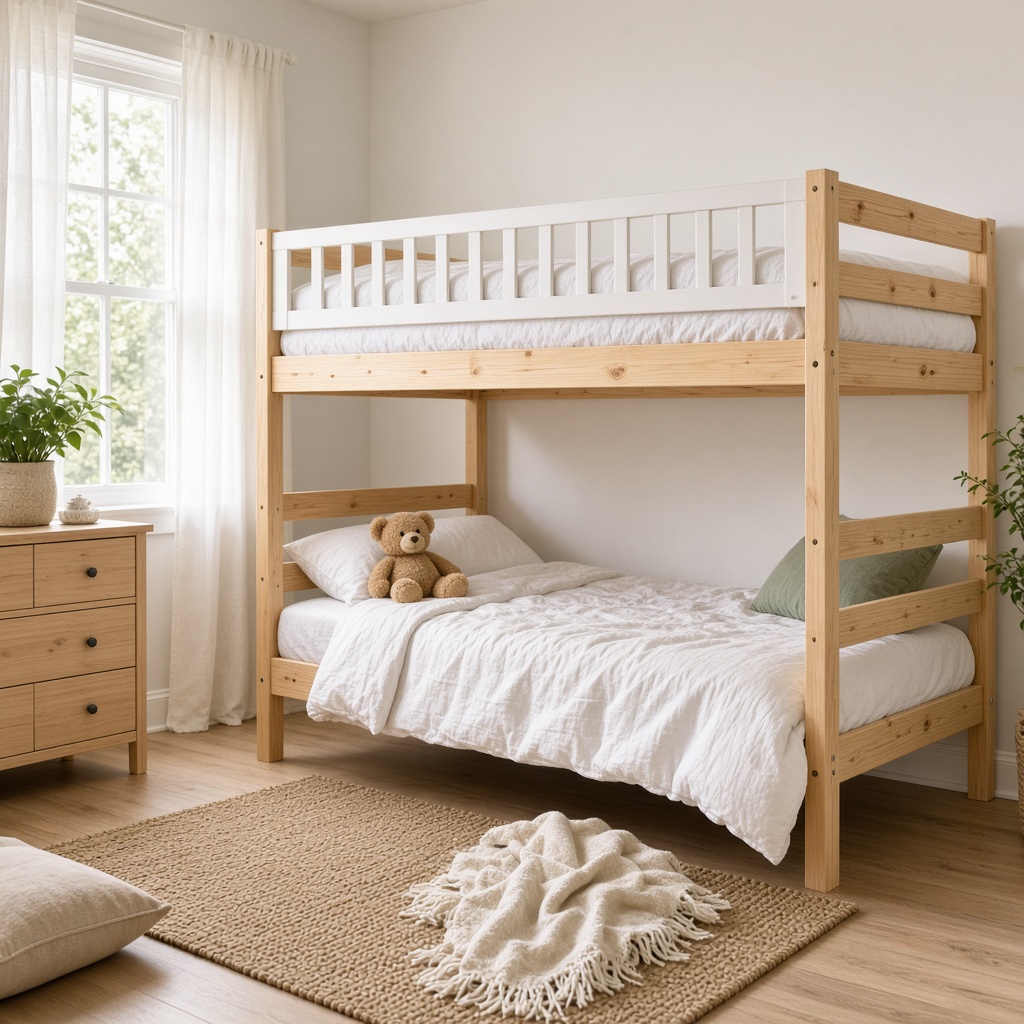
The loft photo used the wrong mattress
The loft photograph still had a plump pillow-top on it. I had maxandlily.com open on 27 September 2026, and the fit guide two clicks later wanted a five-inch mattress. Not a styling quibble. That is the rail. A fourteen-inch guardrail stops doing its job when you stack hotel bedding on a raised surface. I closed the pretty loft tile and opened the dimension sheet instead.
Max & Lily draws kids furniture in Charleston, South Carolina, and builds it with a dedicated partner in Vietnam. The shop ships bunks, lofts, house beds, and dressers into the United States and Canada. Frames in this story are knot-free solid pine — often listed as New Zealand stock — with water-based glues and a low-VOC finish. You are not buying a neighborhood mill. You are buying a parent-facing catalogue that publishes rest ratings and puts a slat roll in the carton. If the bedroom has to share a ZIP code with the saw, this is the wrong vendor.
Who this pine stack is actually for
Stay if you have two adults, a tape measure, and a child who can climb a ladder without being carried. Stay if the room can take a twin footprint — thirty-eight by seventy-five inches of mattress — or a full at fifty-three by seventy-five, and you will keep the pad thin. Stay if you want a classic ladder bunk the spec sheet actually says will come apart later into two singles.
Leave if you already decided on a twelve-inch pillow-top. Leave if one person is going to drag a hundred-pound carton up a walk-up. Leave if the ceiling is under eight feet and the tile you like is a high loft. Leave if the sleeper is under the brand’s usual six-and-older note for raised surfaces. Leave if you live in Canada, Alaska, or Hawaii and you treat a thirty-day return as part of the plan. Those addresses do not get the ordinary pickup.
Four hundred pounds of rest. Two hundred on the rungs.
Each sleeping surface is tested, the company says, to four hundred pounds of resting weight. Occupant, mattress, and bedding count inside that figure. It is a rest rating, not a trampoline rating, and not permission to turn the top bunk into adult gym gear. Metal hardware and a metal under-bed bar share the frame with the pine. A plywood slat roll arrives in the box so you are not hunting a bunkie board.
And the ladder is a different number. Warnings on the cards I opened that morning said one climber at a time, no more than two hundred pounds on the rungs, two hands, face the steps, and do not haul a heavy load while you climb. Low bunks sit under three feet off the floor. The lower sleeper is on the floor. Classic height and high lofts are the tween and teen tools. This is not a developmental diagnosis. If balance or sleep-safety needs would make a stacked bed a bad idea, a low single with a guard is the more honest purchase, slide or no slide.
The rail loses if you upgrade the mattress
Guardrails run about thirteen to fourteen inches tall. The fit guide and the safety page both push a low-profile five-inch mattress so those rails still have something to work with. Current bunks and lofts are not recommended above eight inches of mattress. A thick pad lifts the sleeper toward the top of the rail and wrecks the geometry the test assumed. Keep the sleeping surface well below the rail’s upper edge. Standard mattresses only. No box spring. The included slat roll is the foundation.
The brand’s own mattresses are final sale. The cards I opened described a fire-retardant liner without fiberglass; confirm the live product page, because finishes and liners move. Do not assume a marketplace twin labeled “bunk” is five inches thick. A trundle pad, if you add one, is a standard twin and wants a six-inch maximum so it still rolls under. Here is where I got stuck: the loft hero shot and the thickness rule were not arguing the same bed.
Slides, play curtains, staircases, and under-bed drawers change the footprint as much as they change the mood. A twin low bunk that starts about forty-two inches wide grows past fifty-four with the angled ladder, past eighty-four with a slide, or toward a hundred inches long if you swap in a staircase. Cotton play curtains attach with hook-and-loop. They are not a substitute for a guardrail. If the closet door already sulks against the bed wall, buy the ladder and skip the slide.
Check ceiling height and a five-inch mattress against the bunk or loft you actually want before you add a slide or a staircase.
Open the live Max & Lily dimension sheets →The bunk that comes apart, and the loft that needs eight feet
Separability is the feature people assume and then do not have. Max & Lily says classic ladder bunks in a few size families can be taken apart into individual beds. Low bunks cannot. They use four long legs and stay stacked. If the plan is bunk now and two singles later, buy the frame the spec sheet actually says will split. I am naming two beds. Then I stop.
The Twin over Twin I checked assembled to about eighty-one and a half inches long, forty-three wide, and sixty-five high. The carton weighed about one hundred twenty-four pounds. Guardrails were fourteen inches. The ladder is reversible, with grooved treads. Headroom between levels is advertised above thirty-six inches when the mattress stays thin. That is the bunk I would shortlist if two siblings need a stack now and two rooms later.
The Twin Loft, including its ladder, listed about eighty-one and a half by fifty-nine and a half by sixty-eight and a half inches, with roughly fifty-two inches of under-bed clearance on a five-inch pad. Shipping weight sat near ninety-nine pounds. That volume is for a desk or a dresser, not a second sleeper, unless a trundle actually fits. The brand wants an eight-foot ceiling on high lofts. A limp seven-foot room will make the upper sleeper feel the plaster. GREENGUARD Gold on these pine cards is a chemical-emissions screen, not a promise about sleep. Dresser anti-tip kits only work if you attach them to the wall.
Two adults, a packing slip, and the first retighten
Solid pine ships heavy. Max & Lily tells you to use two adults to move the boxes and to assemble. Tools, slat roll, and hardware ride in the carton. Plan on a couple of hours and a cleared floor. Instructions are model-specific PDFs. Hardware needs a retighten after the first weeks of kid use. Install every guardrail and the ladder before anyone sleeps upstairs. Booked assembly through Angi is a paid extra; that house-call price is unpublished until you book, and I am not inventing one. Inspect the carton before the driver leaves if you can. Missing-part claims want photos within thirty days. The packing slip is the object I would keep on the counter, not a screenshot of the loft tile.
The number I trust on a Max & Lily card is mattress thickness, not the rest rating. Four hundred pounds will not save a fourteen-inch rail once a hotel pad is under the comforter, and a slide will not fix a seven-foot ceiling.
— Ethan Cole
How the order actually moves
You buy on maxandlily.com. Orders process for an estimated two to five business days, then ship FedEx Ground from a South Carolina or California warehouse. Free shipping, on the live shipping page I opened, applied to continental-US orders over four hundred dollars. An FAQ still mentioned three hundred fifty. Trust checkout. Canada is a paid FedEx ladder. Alaska and Hawaii are express-priced. Rush options exist after processing, continental US only. Direct-from-vendor pieces skip rush and will not go to PO boxes. A preorder can hold the whole cart until a missing piece is ready.
Returns of new, unused, unassembled, undamaged items are accepted within thirty days through a return-request form, with doorstep pickup. Original packaging is preferred. There may be a ten percent restocking fee; store credit waives that fee. Mattresses are sunk cost. Canada, Alaska, and Hawaii orders are not eligible for ordinary returns. The warranty is one year from delivery for defects in materials or workmanship, non-transferable, and it excludes misuse, modifications, and commercial use. If a bolt bag is short, use the replacement-request form.
Fee bands, written the way you would say them
I am not printing a grid. Sale tiles move. The cart is the live ticket. This is the shape from that same visit, spoken the way you would warn someone before they tap pay.
- A sale twin bunk sat around four hundred forty-nine dollars against a regular list near five hundred sixty-nine, which would clear a four-hundred-dollar free-shipping threshold inside the continental United States.
- Classic twin-over-twin and loft prices climb with finish, a staircase, or a promotion. Angi assembly is extra and is not in the furniture total.
- Canada freight started at fifty dollars on goods under one hundred dollars and stepped up toward two hundred twenty-five dollars as the cart climbed toward one thousand.
- Alaska and Hawaii used express pricing, from about one hundred fifty dollars on small orders up to about eight hundred fifty dollars once the goods crossed eight hundred one.
- A ten percent restocking fee can apply on a return; store credit is the path that waives it. Unused and unassembled is the return the policy describes.
- Mattresses, if you add them, are final sale. Factor that as sunk cost before you click.
Who should close the tab
- You want a twelve-inch hotel mattress on a top bunk or loft. The rail will not survive that choice.
- One adult is supposed to assemble a carton that ships near a hundred pounds. The brand wants two.
- The room is under an eight-foot ceiling and you are shopping a high loft.
- You need ordinary returns from Canada, Alaska, or Hawaii.
- The sleeper is under the brand’s six-and-older guidance for raised beds, or cannot climb without being carried.
- You assumed every bunk splits into two singles later. Low bunks stay stacked.
- The closet door already fights the wall where the slide would land.
The catch: a low bunk can look like the safe answer in a short room, and it often is, but it will not become two beds when the kids want separate rooms. If that later split is the whole reason you are spending four hundred-plus dollars on pine, you need the classic ladder frame, not the four-long-leg stack.
What this brand will not do for you
It will not turn a seven-foot ceiling into an eight-foot loft. It will not make a thick mattress safe on a fourteen-inch rail. It will not assemble itself on a weeknight. It will not take back an opened mattress, and it will not run a casual return from Canada or the non-continental states. Rounded corners, anti-slip steps, and patented connectors show up in the safety list. None of those features replace a room that is too small. Annual US safety-testing language on the site is a claim to read on the exact card, not a blanket for every accessory in the cart.
FAQ: checkout questions, not loft-vibe questions
Do I need a box spring or a bunkie board?
Skip the box spring. Skip the bunkie board. The current Max & Lily frames I opened already include a slat roll. The upgraded slat accessory is only for a heavier mattress that still stays inside the eight-inch thickness cap. A box spring on a bunk eats headroom and lifts the sleeper toward the rail. If a used pad came off a different platform, check that it does not sag between these slats — sag is how a child ends up sitting too high on a top bunk.
Can a child under six share a low bunk?
The brand’s raised-bed guidance is generally age six and up for lofts and top bunks. A low bunk puts the lower sleeper on the floor and the upper sleeper under three feet up, but it is still a bunk with a ladder. Keep the thick mattress off the upper surface. If the younger child cannot climb independently, a single low bed plus a trundle is the simpler layout. Low bunks also cannot split later. I am not diagnosing who is ready to climb. I am repeating the warning on the card.
What does a typical bunk cost to land at the door?
A sale twin bunk was listed around four hundred forty-nine dollars against a five-hundred-sixty-nine regular price when I checked, which would clear the four-hundred-dollar free-shipping line inside the continental United States. Classic twin-over-twin and loft prices move with finish and promotions. Canada and non-continental US add the published FedEx ladders. Angi assembly is extra. Unused and unassembled is the return the policy describes.
Why do two pages disagree on free shipping?
Because they do. The live shipping page advertised free shipping on US orders over four hundred dollars the morning I checked. An FAQ still mentioned three hundred fifty. I am not inventing a third threshold. The cart total is the one that ships. If your order sits in that fussy gap, add a thin mattress only if you already wanted it — mattresses are final sale — or wait for a promotion that actually crosses the line checkout is using that day.
What if FedEx scanned delivered and the porch is empty?
Multi-box orders can arrive on different days. Wait for every carton before you declare a missing slat roll. Then photograph the packing list, the open box, and the gap, and file the replacement-request form within thirty days. For a FedEx “delivered” scan with no furniture on the porch, the missing-order window is fourteen days from that scan. Canada, Alaska, and Hawaii customers may pay freight on replacement parts even when the part itself is covered. Do not put a child on a bunk missing a guardrail while you wait for a replacement bag. An incomplete frame is a pile of pine, not a place to sleep.
Can I send it back after I assemble it and hate the color?
The return the policy describes is new, unused, unassembled, and undamaged, inside thirty days, through the return-request form, preferably in the original packaging. Once the hex key has been around the frame, you are outside that clean path. A ten percent restocking fee may apply; store credit is the waiver. Photograph everything before you start, and do not cut the carton into trash-day pieces until the hardware bag is complete and the color is the color you thought you ordered.
Is GREENGUARD Gold the same as solid wood?
No. GREENGUARD Gold is a third-party emissions screen for indoor air. Solid knot-free pine is a structural claim. A bed can be one, both, or — on some pieces still being certified — not yet Gold even if it is pine. Max & Lily says many collections are already Gold and that it is working toward the rest by 2027. Read the badge on the exact card, not the homepage. Low-VOC paint language is about finishes, not a medical outcome. If indoor air is the purchase driver, look for the Gold mark on the frame you are buying and still air out a newly unboxed bunk.
Pick the bunk that can split if you need two singles later, keep the mattress at five inches, and confirm the current free-shipping threshold at checkout.
Shop Max & Lily with the tape measure out →Buy the ceiling, not the slide
Max & Lily is a spec-heavy US kids bunk and loft line if you want knot-free pine, a four-hundred-pound rest rating, included slats, and a Twin over Twin that can become two beds later. It is a poor fit if you need a twelve-inch mattress, a one-person assembly, or easy returns from Alaska, Hawaii, or Canada. Choose low bunks for height-shy rooms and accept that they stay stacked. Choose a Twin Loft only with an eight-foot ceiling. Keep mattresses at five inches so fourteen-inch rails still mean something. Tighten bolts. Anchor dressers. Treat the six-and-older note as a buying filter, not a vibe.