Yes. I opened the legal footer again on 27 September 2026 because a friend sent the same three-word text I keep getting about this brand: is this shop legit? Maisons du Monde is a French furniture and decor retailer with high-street stores and a working shop at maisonsdumonde.com. The papers sit at Le Portereau, 44124 Vertou Cedex, France. Full company-registration strings differ by country footer, so those numbers stay unpublished here instead of getting copied from a page that may already have been rewritten. You are not wiring money to a ghost listing.
And that is still not a blessing to buy the first printed armchair you screenshot.
Real waiting.
Who should actually keep the tab open
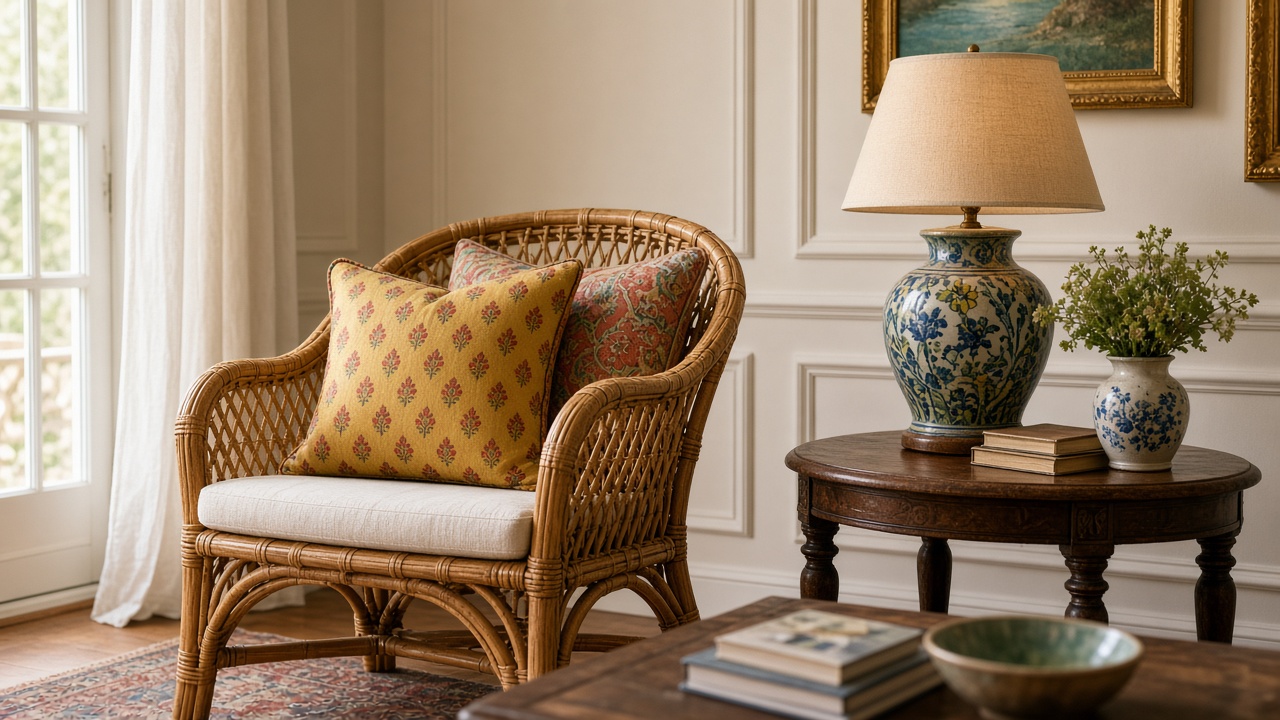
Keep it open if you want a colourful, eclectic room that looks decided, not a cabinetmaker’s workshop. Renters on a first lease, people dressing a guest room in a hurry of taste rather than a hurry of calendar, anyone who likes rattan next to painted wood next to a patterned lamp: this is the merchant that already thinks in room stories. After a Saturday in a Maisons du Monde store you leave with a mental collage. Mixed metals. Printed textiles. A statement light. A sideboard that photographs as if a stylist slept there.
On the website the same collage is for sale, country by country, with seasonal drops that turn over faster than a hardwood commission ever would. If that sounds like your brain, you are the customer. If you came looking for one oak carcase that a named joiner will still repair in thirty years, you walked into the wrong aisle and you will be angry at veneer that was never hiding from you.
If you can wait weeks for a sofa-sized carton, if you can follow a cam-lock drawing or pay someone who can, and if you will lock the country selector to the postcode that actually receives the van, this catalogue is doing the work it was designed to do. Honestly, that is a narrower brief than the lookbook pretends.
Who should close the basket and go somewhere slower
Close the tab if you only want compact furniture because the studio is small and the plan is already full. Stylists photograph sofas with empty floor around them. A Lyon studio of about twenty-two square metres does not have that empty floor. Neither does a Berlin walk-up whose landing turns like a corkscrew. Narrow consoles and petite tables exist in the range, but the camera prefers statement pieces, and you will talk yourself into a footprint the room cannot keep.
Walk away if you want heirloom cabinetry. Local joiners and the brocante still own that work. At this European mid-price band you should expect board, veneer, metal frames, and mixed substrates. A mango-coloured tabletop is usually a finish story, not timber from one farm milled into a single carcase. None of that is a scandal. It becomes a scandal in your head if you expected dovetails and a repair ticket in 2050.
- You need pieces one person can carry up a winding stair without a second adult and a swore-at landing
- You want custom hardwood joinery meant to be repaired, not replaced, in a couple of decades
- You refuse to pick a country site and will paste a French product URL into a German or Spanish checkout
- You need the dining table for a dinner this Saturday and you have no in-store stock plan
- You will not assemble anything and you will not pay a fitter either
- Your building forbids bulky deliveries or has no legal place for a furniture van to stop
Lock the country before you fall for the print
Before the fabric, before the cushion, before the pretty roomset, lock the country. The .com address is a family of shops, not one inventory with a translator bolted on. France, Britain, Belgium, Spain, and Germany can show different lines, different VAT, different carriers, and different return desks. A city store can disagree with all of them. I have watched people lose a week because they bookmarked a French product page and tried to finish the order in another country. Why would a Berlin warehouse honour a Paris bookmark? It will not.
French delivery copy flags several islands as exceptions to the mainland contribution story. Corsica is named, and so are Belle-Île, Île d’Yeu, and Île-de-Groix. If your postcode is not mainland, do not trust a remembered fee sentence from a blog. Read the live checkout. After you switch the header from France to Spain, empty the basket and start again. Tax wording, contract language, and the inbox you use after a cracked foot belong to the flag you paid. Keep a screenshot of the summary.
The store you walked through on holiday is not a promise that the same chair ships to your rental. Collect-in-store does not mean every web line sits in the back room. Ask someone on the floor to touch it. Mixing country URLs is how a sofa waits in a depot you have no right to enter. Open the site that matches the van’s postcode, then measure the room. Then measure the stair. Then, if you still like the print, pay.
What a Maisons du Monde roomset is actually selling
Maisons du Monde sells atmospheres. Colourful, eclectic room sets. Seasonal collections that get refreshed the way a shop window gets refreshed, not the way a joiner refreshes a brief. Corporate copy in 2026 still talks about making homes shine and about a good-is-beautiful line. Fine. Treat that as merchandising, not as a timber grade.
Buying here is like taking home the painted backdrop from a play you loved. On stage the whole room looked like a life. On your landing it is a sheet of colour that was never meant to outlast the run. That is the only comparison I will give you, and it is the one that keeps people from being furious at a veneer they chose with their eyes open.
Read the materials paragraph on the sheet. Weight matters more than the lifestyle caption. A vintage finish is often factory paint. A rattan look can be honest rattan or a mixed frame with a story attached. That mix is fine when you wanted a seasonal rental living room you can order from a phone. It is a fight when you wanted one hardwood box and a person with a plane. Local brocante still owns that hunt. Maisons du Monde owns the coordinated look.
How an order actually moves from basket to doorstep
You pick a country. You put a piece in the basket. The site tells you, if you read the small line, whether this travels like a parcel or like furniture. Cushions and small decor often go through the Colissimo family, sometimes to a pickup shop. Larger pieces more often ride a furniture network the company has tied to Geodis and similar hauliers, with a separate map of furniture collection points. The postage line is written as a contribution by basket total and zone, not as a taxi meter by the kilo.
Expect a call from the shipping desk to pick a day inside the window the confirmation already printed. Small cartons usually stop at the front door of the building. Carrying to a floor and building the piece are extras, and only when that extra is offered for that weight class. Large furniture tends to arrive on a pallet, wrapped or boxed. For a walk-up, tell them about codes and parking before the slot is carved in stone.
Legal pages aimed at British readers have, when no other delay is printed, talked about a fortnight-plus of working days for metropolitan France after confirmation, and closer to three or four weeks when the address sits in another listed country. Checkout still prints its own estimated day. Treat both as a diary hint, not a GPS pin. Holiday collections, a missing screw bag, and a missing door code on a walk-up will push the day later. Look at the live wait printed on the piece you want, not a remembered blog sentence.
The base drop does not build the piece. French checkout has sent people to a NeedHelp-style montage booking: choose the furniture type, prepay a fitter tariff, wait for that diary. Those amounts move by month and by town. Treat the menu as proof that assembly is a separate market, not as a quote for your staircase. Follow the cam-lock drawing yourself if you have help for a wide headboard. Skip the paid fitter then. On a fifth floor with no lift, gather people and hours before the truck is allowed to choose a morning.
Choose the flag that matches the van. Then read who will carry the carton and which day the line promises, before the styled photograph decides for you.
Open the country site that matches your postcode →Fees in words, without a table you will screenshot and regret
I will not dump a price grid. Fees change by country site, by order total, by zone, and by whether the line is a cushion or a wardrobe. In words: small parcels can sit in a low contribution band, sometimes free once the basket clears a spend threshold the checkout will show you. Furniture contributions step up as the basket grows, then often drop or vanish above a higher spend line. Island and remote postcodes can sit outside those bands entirely, or refuse the order.
Assembly, where offered, is a second invoice. Room-of-choice or PLUS-style carrying, where offered, is another. Returns can include a restocking or return-carriage cost depending on the country terms you accepted. Payment is ordinary card and the usual European checkout methods on that country path. None of this is hidden if you read the basket. All of it is easy to miss if you only look at the styled photograph.
- Parcel contribution: low, or waived once the basket clears a threshold the site prints in the live checkout
- Furniture contribution: a stepped band by order amount and zone, not a kilo-by-kilo taxi meter
- Island and non-mainland postcodes: often a separate rule, sometimes a polite refusal
- Threshold delivery is the default; upstairs carrying is a paid extra when that extra even exists
- Assembly booking is prepaid and separate, priced by furniture type, not by how many floors you climb
- Returns follow the country site you paid on; a neighbour’s rumour from another URL does not transfer
Limits the photograph will not warn you about
The lookbook will not mention your stair width. Write the centimetres down. Finished width is not carton width. Some pieces ship in several boxes. Some arrive as one unforgiving slab. Weight limits and balcony rules in a rented building matter for stone-look tables. Hardware bags go missing on ordinary Tuesdays. Photograph shortages before you bin cartons. Cooling-off days belong to the URL you paid, not to a rumour a neighbour heard on a different flag.
The brand’s visual identity rewards pieces that need air. After you fall for a three-seat sofa, the landing turn still gets a veto. A printed rattan cupboard that cannot turn the stair is not a personality. It is a collection booking, a storage invoice, and a week of tickets. Furniture clocks run in weeks. Decor parcels can still be a few days. If Saturday’s lunch needs a table, do not pin the meal on a warehouse sofa. A small cushion toward a pickup shop might still arrive. A wardrobe will not.
Shop-floor piles and the website diverge. An autumn-winter drop will vanish by spring, which is the point of a seasonal merchant and a problem if you wanted the twin chair next year. A compact-packing specialist still wins on spare parts and box geometry. A local Emmaüs depot still wins on solid wood you can restore. This brand sits in the gap: louder print, faster turnover, less of a forever object.
This shop will sell you a room that already looks like someone chose. It will not hire your carpenter, carry the carton upstairs, or honour a French tab at a German doorway. Measure the stairwell first. Then the wait. Then the print.
— Maya Torres
Checkout questions people actually send after they have already paid
Can I check out in French and send the van to Spain or Germany?
Only when that basket lists your country as a destination. Each site version publishes its own shipping list. A French phone session does not create stock in Cologne or a returns desk in Valencia. Change the header, empty and rebuild the basket, then reread the carrier sentence and the cooling-off window. The inbox you write to after a cracked foot is the inbox of the site you paid. Screenshot the summary before you close the tab.
Will the crew take the wardrobe to the bedroom and put it together?
Usually no. A parcel driver often stops at the building door. A furniture crew books a window and may still leave the carton at an agreed point, not in the bedroom, if the stair is a walk-up or the lift is out. Paying a NeedHelp-style partner or a local fitter is a second diary, not a hidden line inside postage. Room-of-choice extras, when they exist, are limited by weight and by the piece. Plenty of cartons never offer them. Read the delivery line before you pay. Do not schedule a Saturday build for the hour the lorry pulls away.
What diary should I keep for a sofa-sized order?
Give sofas, wardrobes, and tables weeks, not a weekend. The estimated date on the checkout — not your neighbour’s lamp story — is the figure that matters. Older terms talk of a fortnight of working days inside metropolitan France and a longer wait abroad. That is a diary hint, not a clause you can read at a driver. Busy collection weeks, a missing bag of fittings, and island extras will stretch it. If the date cannot slip, buy floor stock you can walk out with, or delay the photographs until a slot exists.
If it looks like wood, is it solid?
Sometimes a rail or a top you can see is solid. Often the hidden structure is board, veneer, and a solid lip that photographs well. The materials paragraph on that line is the only honest answer. If the sentence hedges, write before you pay, or hire a joiner. A seasonal “craft” caption is not a grade stamp. If the sheet will not say, that silence is already an answer.
What if a hardware bag is missing when I open the carton?
Photograph the opened box, the missing bag area, and the order number before you throw anything away. Contact the country-site desk you paid on, not a social inbox for a different language path. Cam-locks and specific screws are not a hardware-shop guess you should make at ten at night. Keep the cartons until the replacement parts are confirmed. If you assembled half the piece with improvised screws, you have complicated a return that might still have been simple.
Can I send a furniture carton back after I have opened it?
Often yes inside the withdrawal window on the country site you used, if the piece is complete, unused in the lived-in sense, and still in a state a warehouse can resell. Opened packaging is not automatically a refusal, but missing shelves, a torn fabric sample, or assembly scratches can be. Furniture returns are not a parcel-shop drop in most cases. You may need a booked collection, and you may owe a return contribution. Read the withdrawal paragraph you ticked, not a forum post from 2022.
Is click-and-collect the same catalogue as the website?
No. A store can be out of a web line, and the web can show a look the shop floor never held. Collect is a fulfilment method, not a second warehouse of everything. If you need the piece this afternoon, call the store, ask them to physically touch it, and only then start the car. If they cannot touch it, you do not have it, no matter what the product page still displays.
Write stair and wall in centimetres, open the flag that matches the address, and stop if the furniture wait misses the day you actually need the room.
Measure first, then open Maisons du Monde →If you wanted a styled room, not a family heirloom
Maisons du Monde is a legitimate French furniture-and-decor retailer. Stores exist. The site exists. The Vertou address exists. The merchant is strong on colourful, mixed rooms and weaker on objects meant to last a generation. Match the country path to the van’s postcode. Expect a wardrobe to move slower and heavier than a cushion. Treat assembly as extra hours or extra money. A compact-only studio kit still belongs to a packing specialist or a second-hand hunt. Heirloom hardwood still belongs to a joiner or a brocante. A coordinated rental look, if you can wait, is exactly the work this catalogue was designed to do. That was the whole answer to the text.