Skip Seep if you need a sponge before dinner
Skip this shop if you just need a cheap supermarket sponge this evening. Seep will not slide one across a till. It is a UK website that posts plant-fibre cleaning tools, and the delivery line I read on 27 September 2026 was two to three days on the mainland. That is a parcel. It is not a yellow block you can hold before the pasta water boils. If the pad by the taps has gone sour and the plates are already stacked, you are better off nipping to the shop on the corner. Close this tab. Come back when the emergency is over.
I will rewind. People open theseepcompany.com because the ordinary kitchen sponge is plastic foam with a scratchy plastic mesh. Those foam bricks shed crumbs into the bowl and then go in the bin. Seep's pitch is a cellulose pad with a loofah face, plus washable cloths, so you buy fewer of those foam bricks. Whether that pitch is worth postage is the rest of this page. The homepage will try to make it a mood. I am treating it as a cart.
Two lines in the basket. That is the whole sample.
On 27 September 2026 I put two lines in the cart and stopped. A four-pack of Eco Sponge Scourers sat at about twelve pounds. A four-pack of Eco Sponge Cloths sat at about nine pounds fifty. Subtotal before postage: a little over twenty-one pounds. I had those two packs in the basket — nothing else. That is the concrete object I mean when I talk about this shop. The packing slip, when it arrives, is a short paper note in a small box. It is not a manifesto.
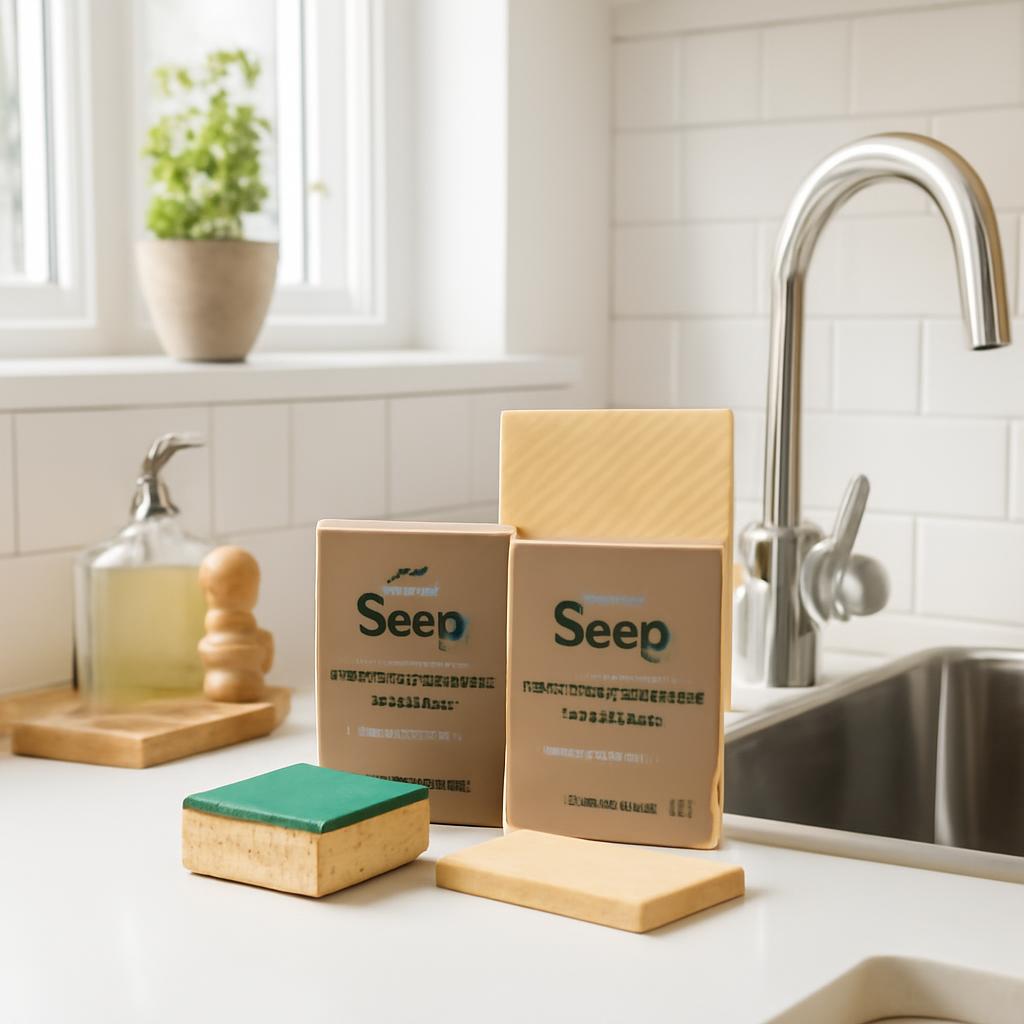
The Eco Sponge Scourer is a thin brick, about the size of a travel soap. One face is wood-pulp cellulose. The other is a dried loofah vine, stitched on with cotton. It is less savage than the green mesh on a supermarket sponge. Burnt porridge still needs a soak. The cloths are the floppy sheets people use instead of kitchen roll: plant fibre, printed, made to be wrung out and washed. I am naming only those two. The rest of the homepage is a family of similar tools, and listing them would turn this into a catalogue.
Materials are not a trick. Cellulose swells when wet and goes thin if you leave it in a puddle. Loofah scratches gently, then softens. The cloths take a stain if you wipe turmeric and forget the wash. None of that is a defect in the way a torn seam is a defect. It is how plant fibre behaves in a wet kitchen. If you want a pad that stays identical for six months in a soap dish, you want plastic foam. Seep is selling the opposite habit.
Who should actually pay postage
This shop is for a household that already swapped the washing-up liquid and is now staring at the last plastic sponge. You will pay more per piece than the three-pack at the supermarket. You can wait two or three days. You have a radiator or a rack where a sponge can dry on its edge. You would rather wash a cloth than buy another paper roll. You do not need a speech about the planet. You need a scourer that does not flake green grit into the roasting tin.
It also fits a small office kitchen that can share one postal order and does not need a sponge before the next kettle. Shared sinks kill cheap foam in a week. A firmer cellulose pad that people rinse and stand up lasts longer if anyone bothers to wring it. If nobody wrings it, you have bought a nicer thing to leave in a mug of grey water. I would not order for that room.
Landlords who stock a holiday flat are a weaker fit than they first look. Guests will treat a loofah pad like the yellow brick they know, park it in the wet tray, and leave. You will replace it as often as the cheap one, only at a higher unit price. Buy Seep for a kitchen you actually stand in. Do not buy it as a gesture in a welcome basket.
Who should skip the cart
I opened with the evening emergency because that is the honest filter. Here is the longer list. If any line is you, leave the basket empty.
- You just need a cheap supermarket sponge this evening, or any sponge you can hold before the next meal.
- You want same-day click and collect from a high-street chemist and you will be annoyed by a two-day card box.
- You only attack pans with steel wool and you will hate a softer loofah face.
- You refuse to dry a sponge between uses and you will blame the brand when it smells.
- You want a named compost certificate on the product page. That document is unpublished on the listings I used.
- You need a sponge that behaves like plastic foam after six months in a wet dish.
I am dry about this because the marketing is not. The site talks about wiping plastic crumbs out of sinks. Fine. That sentence does not change the next fact. A wet cellulose pad left in a metal bowl behaves like a forgotten tea towel. It goes limp and starts to smell before the fibres have worn through. If you will not hang it up, you will hate the purchase.
How buying actually works
The storefront is a small-brand Shopify site. You pick a pack. The cart adds it. A postage line appears if you sit under the free-delivery mark. I used the Awin hop that PeterKnowsBest carries, which lands on theseepcompany.com. There is no secret affiliate catalogue behind the link. You see the same homepage a cold visitor sees. Card checkout is the path I took. Wallet buttons come and go by phone and browser. I will not promise a button that was not sitting in front of me that afternoon.
Delivery copy on the scourer page said free UK postage from thirty-five pounds, and about three pounds ninety-five below that. Two to three days was the mainland estimate. I did not place a Highlands or island order. A timed next-day slot was unpublished on the pages I used. If you need a Saturday guarantee printed on the cart, this is the wrong merchant. International rates were also unpublished in the snippet I trusted, so I will not invent a euro-zone band.
Returns sit behind a thirty-day money-back note on the product FAQ. I did not invent a prepaid label, a restocking fee, or a Royal Mail reference, because those figures were unpublished in the text I had. Hygiene rules on a used sponge are the thing to read before you wet the first pad. A dry, unopened four-pack is a cleaner return than a sour brick in a bag. If you think you might send it back, do not dunk it for a test wipe.
The Awin hop goes to theseepcompany.com. Use it only if a two-day parcel already makes sense and tonight's sink is already covered.
Open the Seep shop →What the cart charged, in words
Prices move. I am writing the bands I saw on 27 September 2026, in words, because a digit table goes stale and starts looking like a catalogue. Check the live cart before you pay. Sale stickers on the twelve-pack can shift by Monday.
- Four Eco Sponge Scourers: about twelve pounds before postage.
- Twelve Eco Sponge Scourers, when the year pack sat on the lower figure: about twenty-eight pounds fifty against a higher thirty-six-pound line.
- Four Eco Sponge Cloths: about nine pounds fifty.
- Standard UK postage under the free line: about three pounds ninety-five.
- Free UK delivery from about thirty-five pounds of goods.
- Returns window: thirty days as written on the site; outbound return postage unpublished in the copy I used.
A stingy basket of one four-pack of cloths will pay postage and still arrive as a small parcel. Crossing thirty-five pounds usually means adding the twelve-pack of scourers or mixing scourers and cloths. That is how a shop like this nudges you. It is not a mystery surcharge at the door. VAT sits inside the pounds you see. I did not find a separate levy printed on the packing-slip sample text.
Limits I will not dress up
The loofah face is fussy on non-stick if you lean on it. I would not take it to a coated milk pan the way people attack a stainless pot. A compost mark with a scheme name and a certificate number is unpublished on the listings I read. The company says the materials can return to the earth. That is not the same as a certificate I can quote. I will not invent one. Sponges are sewn in China and designed in the UK, per the origin note. Cloths on the four-pack page were made in Germany and printed in Sweden. If made-in-Britain is your only filter, this is a miss.
B Corp status is stated on the homepage. I did not audit the filing. I also did not run a twelve-person sink trial, and I will not paste fake star ratings. The site displays its own review widget. Treat that as the merchant's badge, not as my homework. A collection page mentions a Good Housekeeping note. I did not re-test the lab, so I am not hanging the review on that seal.
On grit, be honest with the pan in front of you. A loofah vine is a dried gourd, not a sheet of mineral mesh. It will lift dried sauce and the pale film on a glass. It will not pretend to be a contractor's stripping pad. If your weekly job is blackened trays from a student oven, soak first or keep a separate metal coil for that tray alone. Mixing those jobs in one foam brick is how people decide plant fibre is limp. The fibre was never hired for that.
After the packing slip lands
When the box lands, the useful habit is dull. Rinse the scourer. Squeeze it. Stand it on its thin edge. Do not park it in the soap-dish puddle. Wash the cloths at thirty or forty degrees with a normal load if the care line still says that when you check the packet. The loofah will soften in a machine. That is expected. Replace the scourer when it thins or smells through a dry day, not when a calendar app nags you. A month is the life the brand talks about if you let it dry. Wet storage shortens that. I think that is the whole skill.
Sunday washing-up is the ordinary test. Roast tin, two pans, a chopping board. The cellulose side lifts sauce. The loofah side takes the rim of the tin if you soaked it. You will still need a soak on anything you burned while answering a message. Plant fibre is not a drill. If the tin is black, you needed last night's water, not a different brand.
The packing slip will not teach you this. A short care card may sit in the box; mine, when I have ordered similar plant pads, has been a single printed square that repeats the wash line. Keep it near the detergent if you share a kitchen. Housemates who treat every cloth as kitchen roll will go through a four-pack faster than the page implies. That is not a hidden fee. That is people.
A plant-fibre scourer is a fair swap for the yellow block if you can wait for a parcel. It is a poor swap if tonight's sink is the actual problem.
— Marcus Chen
Questions I would ask before I paid
These are checkout questions, not brand lore. If a friend forwarded you the site after a spill, start here and ignore the lifestyle grid.
Will this arrive tonight if I order after lunch?
No. The mainland window I saw was two to three days. Tonight is a supermarket problem. If your postcode is an island or a far Highland, even that window may stretch. I did not test those routes, and a courier name for every postcode was unpublished on the product tiles. Do not treat a homepage promise of a few days as a timed slot you can argue with on a Sunday.
What do I pay for postage if I stay under thirty-five pounds?
About three pounds ninety-five for standard UK delivery, on the copy from that September visit. Free postage starts at about thirty-five pounds. A four-pack of cloths alone will not cross that line. Add scourers or a larger pack if you want the postage line to vanish. Watch the cart after each add. Promo codes can change the goods total without changing the threshold.
Can I return a sponge I already used at the sink?
Read the returns page before you wet anything. The thirty-day money-back note exists. A used, wet scourer is a hygiene argument, not a tidy refund. Keep the unused packs sealed if you are unsure. I will not promise a used pad gets a full refund, because that rule was unpublished in clear type. Photograph the unopened sleeve if you think the fibre looks crushed on arrival. That photo is more useful than a paragraph of complaint.
Do they post outside the United Kingdom?
A country picker may appear at checkout. Live rates for Ireland, the EU, or further were unpublished on the pages I trusted that afternoon. I will not invent a customs band. If you are ordering from abroad, stop at the postage step and read the number. If the number is missing, do not guess. Duties on a box of cloths are a miserable surprise for a nine-pound order.
Can the cloths go in with the towels?
The care note I saw said thirty or forty degrees. That is a warm cotton wash, not a ninety-degree towel boil. Skip fabric softener if you want them to keep drinking water. They will not stay snow-white if you use them on curry and then wait a week. Hang them so the print faces out; they dry faster than a folded wad on a hook.
Why does this page hop through Awin?
PeterKnowsBest is paid if you buy after that hop. The destination is still theseepcompany.com. You are not entering a different shop. Prices and postage are the merchant's. If you prefer to type the address yourself, do that. The article still has to be useful if you never click. I am not going to pretend the hop is a coupon.
Is there a compost certificate I can file with my council?
Unpublished on the product pages I used. Some plant-fibre tools are industrially compostable, some are home-compostable, and some just break down slowly in a heap. I will not pick a scheme name to sound complete. Ask Seep in writing if your council needs a code. Until that letter arrives, treat the spent pad as you would a worn cotton rag, not as a certified bin ticket.
If you still want the parcel
If you already have tonight covered and you want the plastic foam out of the bowl, the four-pack pair I sat on is a reasonable first order. Watch the postage line. Dry the scourer. Wash the cloths. Do not expect a miracle on a burned pan. That is the whole review. The rest is a click you can ignore.
Same Awin hop to the Seep homepage. Check postage on your postcode before you pay, and skip the order if you still need a sponge tonight.
Go through to Seep →