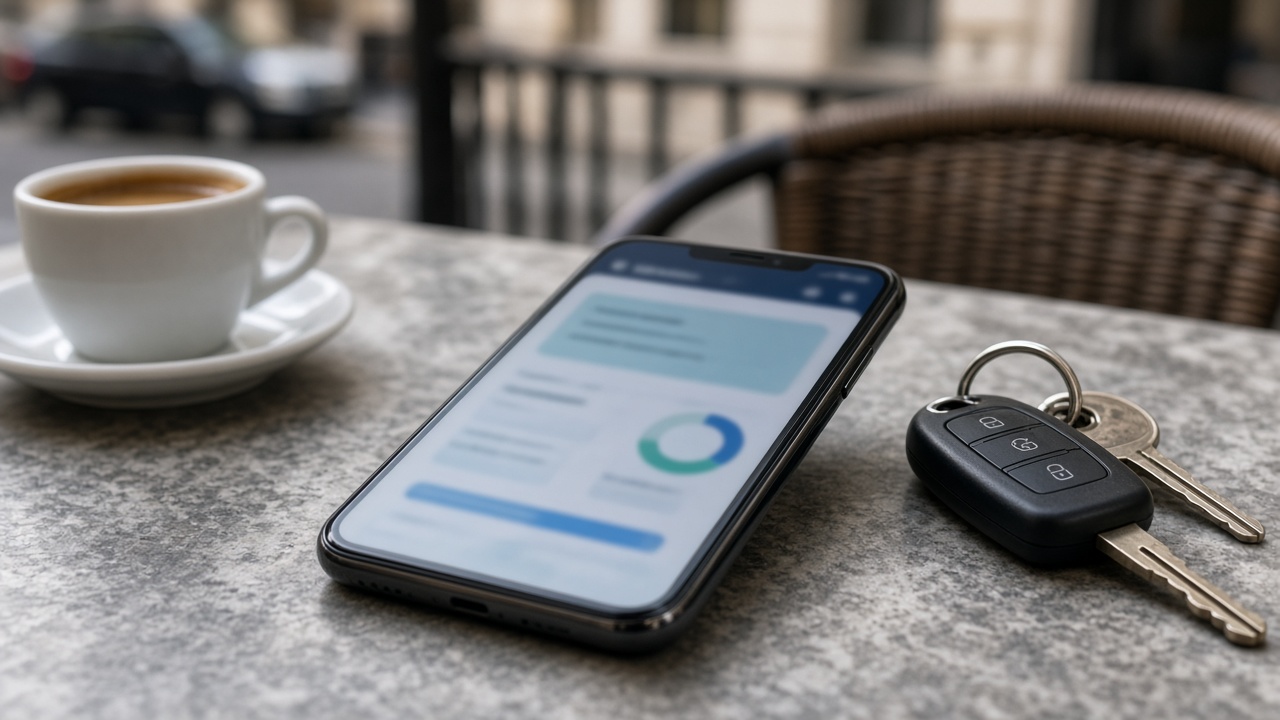
A PKV carrier that happens to look like software
German health cover is compulsory. Most employees sit in statutory public insurance, the GKV, with contributions tied to income. Private full cover, PKV, is a different legal product: benefits are contractual, premiums are calculated on age and health at entry rather than on salary, and leaving later can be hard. Ottonova is a Munich insurer that sells that private product with an app-first service model. Dr. Roman Rittweger, Sebastian Scheerer, and Frank Birzle founded the company in 2015. BaFin granted the insurance licence on 20 June 2017. That licence, not the interface, is what makes ottonova an insurer rather than a wellness subscription. Data is described as AES-256 encrypted and stored in a German data center.
This review is not medical advice, not a personal recommendation to switch, and not a substitute for independent counselling. PKV decisions affect decades of premiums, hospital status, and family cover. Ottonova’s own site pushes a non-binding consultation for that reason. If you are an employee below the statutory income threshold, self-employed in a special scheme, or unsure about pre-existing conditions, stop at eligibility before you fall for an app screenshot. Digital claims are a convenience layer on top of German insurance law. They do not rewrite the Jahresarbeitsentgeltgrenze or the medical underwriting questionnaire.
The 2026 income gate and who can apply
For employees working in Germany, the Federal Ministry of Labour and Social Affairs sets the Jahresarbeitsentgeltgrenze, JAEG. Ottonova’s 2026 pages state that threshold at 77,400 euros a year, or 6,450 euros gross per month. Regular bonuses can count toward the calculation; a one-off spike may not. Crossing the line after a raise often only opens PKV from 1 January of the following year, while a job change can open a faster path. Self-employed people and many freelancers can apply without that employee income test, with exceptions that can include artists, publicists, and farmers. Civil servants and others with Beihilfe use different tariff logic. Students may qualify if they are exempt from GKV or are at least 25, subject to ottonova’s age rules.
Passing the legal gate is not the same as receiving an offer. Applicants complete a health questionnaire. The insurer prices or declines based on that history. Ottonova may ask follow-up questions or request a medical check. People with significant prior conditions can face loadings, exclusions, or a no. Age at entry also moves the premium. That is the structural difference from GKV, where family members can be covered without a second full contribution and where you are not underwritten like a life-insurance applicant. If your household includes children or a non-working partner, run the family arithmetic before you celebrate an individual quote that looks cheaper than your current GKV line.
- Employees generally need regular gross pay above the 2026 JAEG of 77,400 euros, as stated on ottonova’s eligibility pages
- Self-employed and many freelancers can apply without the employee income test, with statutory exceptions
- Civil servants and Beihilfe-eligible people use separate supplementary or full-cover logic
- Health questions and risk assessment still apply after the legal gate
- You cannot hold GKV and full PKV at the same time; start dates have to dovetail
- This article does not tell you to switch, stay, or treat any condition
App, concierge, and telemedicine — the service layer
Ottonova’s commercial difference is operations. Policyholders upload invoices in the app, follow a timeline of appointments and documents, and chat with a concierge that can book doctors. Telemedicine is offered with TeleClinic, including evenings, Sundays, and public holidays. Fully insured members are told they often get priority video slots, with certificates and prescriptions possible through that channel, plus help obtaining a second opinion. English-language onboarding and support are a stated design goal, which matters for expats who should not need a translator to understand benefits. Some signup steps are still completed in German. Reimbursements are described as taking a few days after upload, with prepayment sometimes skipped depending on bill size. None of that is a clinical outcome. It is administration.
The company also sells products for people who must or prefer to remain in GKV, including top-up dental cover advertised from a low monthly starting figure on the homepage. Treat displayed starter amounts as marketing snapshots, not your price. Expat-oriented private tariffs exist for people whose employment facts fit. Ottonova publishes claims about premium-stability ratings, customer-satisfaction scores, and old-age provision, including a statement that on average half of premiums are set aside for later life. Those are company and rating-agency claims. Future medical inflation still exists. Historical PKV and GKV average increase figures on ottonova’s site are backward looking. Nobody can promise your personal premium path.
Check ottonova’s current JAEG guidance and book a non-binding consultation if you already know you legally qualify; do not treat an app demo as advice.
Read ottonova eligibility details →How a switch actually proceeds
Ottonova outlines a sequence: consultation, account, personal and health information, review, possible medical follow-up, offer, payment details, and a one-time PIN to complete cover. There is a 14-day withdrawal right. You are not meant to hold two full health policies at once, so cancellation of the old contract has to match the new start date; ottonova says it can help with that paperwork. Remote workers employed by a foreign company are told to contact the insurer rather than assume the standard employee path. If ottonova cannot offer full PKV, it may still discuss supplementary products for GKV members. The application is slow on purpose. Accidental one-click switching is not how German health insurance works.
Ottonova is interesting as a digitally operated PKV carrier, not as a loophole around German eligibility law. If the JAEG, the health questionnaire, or the family-premium math fails, the app is irrelevant.
— Alex Rivera
Who should stay in GKV, and other hard limits
Stay in public insurance, or at least pause, if you are an employee under the JAEG, if you expect parental leave or income drops that would make PKV premiums painful, if you want non-working family members covered without separate full premiums, or if underwriting would likely load your rate. Returning to GKV later is restricted, especially as you get older, which is a widely discussed structural issue of German PKV rather than an ottonova-only quirk. Ottonova also states it cannot offer private full cover for every age group. People who need paper-first service, or who distrust video doctors, will not get the value the brand advertises. Compare at least one traditional PKV carrier on benefits, ageing reserves, and deductible before you decide that digital equals cheaper.
- Confirm employee income against the current JAEG with payroll, not with a round-number guess
- List every diagnosis, medication, and open treatment honestly on the health form
- Price children and a partner as separate PKV lives, then compare with GKV family cover
- Ask how reimbursements, deductibles, and hospital daily benefits work in the specific tariff
- Use the 14-day withdrawal if the written offer differs from the sales conversation
- Keep this as a finance and process review; a doctor or independent broker still owns medical and legal advice
FAQ: eligibility, GKV, and premiums
Is ottonova available to anyone living in Germany?
No. Full comprehensive PKV is limited to legally eligible groups. Employees need to clear the JAEG. Self-employed, civil servants, and some students have other routes. Ottonova also applies its own acceptance rules, including health and age, so a person who is legally allowed to leave GKV can still receive a loaded premium or a decline. Residents stuck in GKV can still look at supplementary products such as dental top-up. Living in Munich, where the company is based, does not create a special legal exception; it only means the brand is local.
Does the app replace statutory coverage rules?
No. The app organises bills, chats, and telemedicine access. Eligibility, cancellation timing, and the ban on dual full cover still come from German social-insurance and insurance-contract rules. TeleClinic video visits are a service benefit inside a private contract, not a replacement for emergency care or for the nearest hospital. If you are unsure whether a treatment is covered, that is a tariff question for ottonova or an independent adviser, not something this review can answer for your body or for a specific clinic bill.
Can I keep GKV as a backup?
Not as two full policies at once. Ottonova’s own FAQ says you cancel the old cover so the new policy starts when the old one ends, and the insurer can help with that paperwork. Supplementary GKV add-ons are a different product for people who remain statutory members. Do not assume you can trial PKV for a winter and roll back without friction, especially later in working life. The 14-day withdrawal is the clean exit after a new contract, not a lifetime option to hop systems whenever a premium rises.
Are premiums guaranteed to stay low?
No insurer can guarantee that. Ottonova argues that its calculation method, administration costs, and ageing reserves are built for stability, and it cites independent ratings on its site. Medical inflation still pushes claims across the whole PKV market. Your age at entry and your health disclosures dominate the starting price. Ignore headline savings versus GKV unless they are calculated on your actual income, tariff, deductible, and household. Ask for the written offer, not a homepage example or a friend’s round number.
I am an expat. Is English enough?
Ottonova markets English support and digital onboarding specifically at foreigners who would otherwise face German-only paper. That is a genuine differentiator versus many traditional PKV desks. Some processes, including parts of online signup, may still be German, so keep a bilingual friend or the chat line available. You still need a qualifying residence and employment story. Remote work for a foreign employer is a contact-us case, not a self-serve checkbox. Bring your contract and payslips to any consultation rather than paraphrasing them from memory.
Use ottonova.de to verify current eligibility rules and request counselling if you already clear the legal tests; do not switch based on this article alone.
Open ottonova’s official site →A finance verdict, not a prescription
Ottonova is a licensed German private health insurer with a credible digital operations layer: app reimbursements, concierge booking, English help, and 24/7 telemedicine via a named partner. It is a poor fit, and sometimes legally unavailable, for employees under the 2026 JAEG, for households that need cheap family cover, and for anyone who cannot pass medical underwriting. If you already know you qualify and you care about paperless claims, it is worth a consultation and a written offer compared with at least one analogue PKV carrier. If you do not qualify, look at GKV supplementary products instead of forcing a full private application.