Wilmington paperwork, a Salt Lake warehouse, and consumer LEDs—not a hospital floor
NovaaLab LLC is the legal name behind novaalab.com. Contact pages list a company seat at 2810 N Church St, Wilmington, Delaware 19802, which is typical Delaware formation language, and a fulfilment warehouse at 255 W Central Ave, Salt Lake City, Utah 84107. US orders are described as leaving that Utah building, with live chat hours posted in Central Time rather than Mountain Time. Support routes are a toll-free number, support@novaalab.com, and on-site chat. You are buying a consumer photobiomodulation catalogue—pads, a wrap-style Recovery Pod, and a handheld Light Switch—not a hospital light-therapy suite and not a prescription drug. Treat the Delaware address as corporate paperwork and the Utah address as the parcel origin, then read the SKU page for voltage, timer, and return rules before you pay.
Founder Pascal Le Marechal signs as CEO and chief engineer. Company copy says he looked at red-light hardware after a tennis-related knee injury and disliked bulky clinic panels. That origin story explains why the line leans toward body-conforming pads and a blanket instead of a garage-sized wall array. It does not prove that a home LED wrap will spare anyone surgery, imaging, or physiotherapy. Le Marechal’s letters also repeat marketing phrases about precision wavelengths that you should parse as product design goals: named nanometre bands, contact or near-contact use, and a timer so you do not guess session length. Keep the founder biography as context for the SKU mix, not as a clinical outcome.
Recovery Pod blanket versus targeted pads versus the Light Switch wand
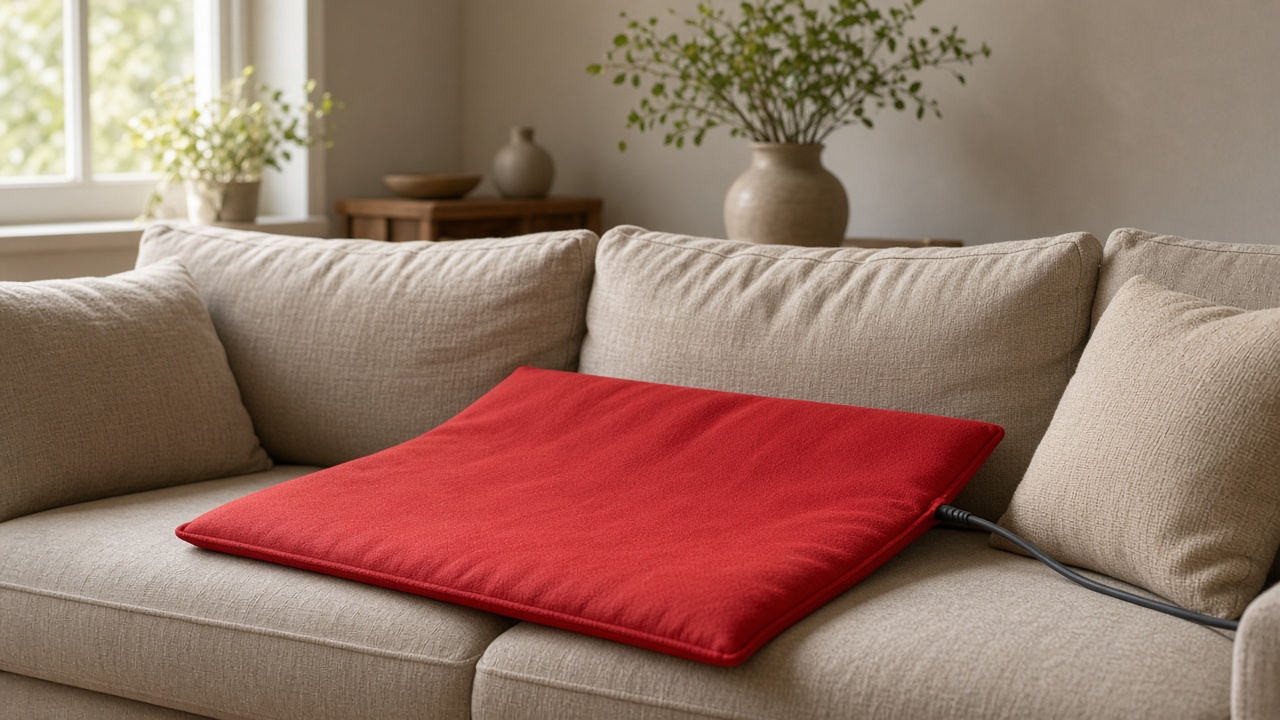
The Recovery Pod is marketed as a foldable full-body blanket using red 660 nm and near-infrared 850 nm LEDs together. Product pages cite on the order of 2,320 diodes and a remote with timed and pulse modes, plus a 100–240 V adapter so the same SKU can travel. A blanket is a coverage tool: you lie in it, you do not aim a beam at one joint. Irradiance claims on brand pages are measured at stated distances; at fabric contact those numbers are not the same as a panel hung 15 centimetres from the skin. Fold-flat storage is the practical advantage versus a rigid Joovv-style array that needs wall space. The constraint is heat, cable management, and the fact that a wrap still only treats the tissue the diodes actually face.
Pads are the middle option: strap or rest a panel on a knee, lumbar area, or shoulder for a local dose. The Light Switch is a wand with interchangeable heads—pain-relief LED, a deeper-targeted head described with laser language, and a skin-oriented head—plus a magnetic charging stand on current listings. A wand is for small areas you can hold still for 10–20 minutes; it is a poor substitute for the Pod if your goal is front-and-back coverage in one sit. Do not assume three heads mean three proven indications. They mean three optical geometries on one battery. If you will not change heads or charge the base, buy a single pad and skip the kit theatre.
- Recovery Pod: wrap-style 660 nm red plus 850 nm near-infrared blanket for large-area sessions, remote and fold-flat storage
- Flexible pads: local coverage for one joint or muscle group when you can strap the diode face in place
- Light Switch wand: handheld body with swappable heads and a charging stand, not a full-body dose
- Named wavelengths on the flagship wrap are 660 nm and 850 nm; other SKUs may mix those bands—read the live table
- Session copy on wand pages clusters around 10–20 minutes per area, several times a week, not a single weekend blast
- Legal entity is NovaaLab LLC (Wilmington) with Utah fulfilment; that is not an FDA hospital department
Photobiomodulation papers are mixed; a shopping cart is not a diagnosis
Photobiomodulation—red and near-infrared light interacting with tissue—has a real research literature in wound models, musculoskeletal pain, and dermatology. Results vary by wavelength, fluence, pulsing, and whether the trial used a medical device in a clinic or a consumer panel at home. Systematic reviews often land on modest or inconsistent effects, small samples, and hard-to-blind protocols because light is visible. Brand sites may say thousands of studies; that count mixes cell dishes, animal work, and heterogeneous human trials. None of that literature lets a retailer diagnose your pain, promise hair density, or replace a workup for a swollen joint. If a page implies guaranteed recovery, treat it as advertising and look for the actual irradiance, timer, and eye-safety notes on the SKU.
People with photosensitivity disorders, those taking photosensitising medicines, and anyone who is pregnant should speak with a clinician before buying or using high-output LEDs near skin or eyes. Some NovaaLab pages use “medical-grade” and similar labels; those words are marketing unless you can map them to a specific clearance, indication, and instructions for use. Home devices can still emit enough light to bother eyes, overheat skin, or interact with photosensitising drugs. Do not use a wrap over broken skin, tumours you have been told to monitor, or unexplained neurological symptoms while waiting for a proper exam. This guide will not name a disease you supposedly have. The buying question is whether you will follow a dull schedule, not whether the diodes will “heal” a condition the internet assigned you.
Open the live SKU tables for 660/850 nm coverage, timer modes, and the current 60-day return window before you pick a wrap versus a wand.
Compare NovaaLab pads, Pod, and Light Switch →A 10–20 minute session only exists if it is on the household calendar
Typical consumer protocols for this category are 10–20 minutes per treated area, three to five days a week, with the diode face at the distance the manual states. That is a diary habit, not a gadget unboxing. If you will not clear a sofa, a power outlet, and eye covering for those minutes, the Pod becomes expensive bedding. Count setup: unfolding the blanket, routing the power brick, setting the remote, and putting the unit away so pets do not chew the cord. Pads need straps that stay put when you shift. The wand needs a charged base and a still hand. Skip the purchase if your real plan is two tries before the unit goes in a closet. Consistency is the constraint the marketing never prices.
Buy a NovaaLab wrap only if you already accept mixed photobiomodulation evidence, a 10–20 minute calendar, and a return shipping bill if the 60-day window is your exit. The diodes are a scheduled tool, not a diagnosis and not a substitute for a clinician.
— Maya Torres
Sixty-day returns versus roughly a one-year warranty, with longer options on some SKUs
Current consumer pages advertise a 60-day money-back window, often styled as love-it-or-return-it, and a one-year international manufacturer warranty that can be extended on eligible orders—sometimes described as up to two extra years. Exact extension fees and which SKUs qualify change; do not treat a banner as a quote. Return shipping is commonly the buyer’s cost if the unit is simply unwanted, which matters for a bulky blanket. Warranty language typically covers manufacturer defects, not wear from sweat, bent cables, or missing the original packaging. Keep the invoice and the serial. If the site lists different warranty lengths on two products, believe the product page you are checking out, not a homepage mosaic. This article will not invent a dollar price for any pad, Pod, or wand.
Joovv wall arrays, PlatinumLED panels, and a no-name Amazon board are different rooms
Joovv built its name on modular vertical panels you stand in front of, which suits a dedicated corner and a user who wants distance-based dosing rather than a wrap. PlatinumLED similarly sells high-output panels with published irradiance tables that hobbyists compare milliwatt-by-milliwatt. Budget Amazon panels undercut both on price and often on documentation: unknown LED bins, inflatable “watts,” and no 60-day structured return of the NovaaLab kind. NovaaLab’s bet is contact or near-contact form factors—blanket and pads—plus a wand for travel. Choose Joovv or PlatinumLED if you have wall space and want a standing protocol. Choose a cheap panel only if you accept sparse support. Choose NovaaLab if a fold-flat wrap fits the room better than a light wall, and you will still read independent irradiance caveats rather than the adjective “medical.”
- Skip if you expect a cure, a diagnosis, or a replacement for imaging, drugs, or physiotherapy
- Skip if you will not run 10–20 minute sessions several times a week for more than a fortnight
- Skip if you have photosensitivity, take photosensitising medication, or are pregnant, until a clinician clears home LEDs
- Skip if you need a standing full-body panel and already measured a Joovv or PlatinumLED footprint that fits
- Consider a pad if one joint is the only area you will actually treat
- Consider the Recovery Pod only if you have floor space, a free outlet, and a plan to fold it away
FAQ: clinics versus wraps, blanket heat, extra wand heads, warranty, and Amazon panels
Can the Recovery Pod replace a dermatologist or a physical therapist?
No. A 660/850 nm blanket is a home light source with a timer. It does not examine rashes, grade a tendon injury, or adjust a care plan. Photobiomodulation studies that look encouraging still sit beside trials with null results and messy blinding. If skin, joints, or recovery after sport are the reason you clicked, book the clinician first, then decide whether a scheduled wrap is an adjunct you will actually use. Using the 60-day window as an unofficial diagnostic test is a bad plan: you may feel placebo warmth, miss a serious cause of pain, and still pay return freight. Keep medical decisions off the product page.
Is a blanket safer than a panel because the diodes are sewn into fabric?
Safer is the wrong word. Contact wraps change dose geometry: less air gap, more heat against cloth, different eye-line if you sit up. Panels at a stated standoff can be easier to dose from a published irradiance chart, which is why Joovv-style users obsess over distance. A Pod still needs eye protection if the manual says so, still needs intact skin, and still should stay off the face unless the instructions allow it. Fabric does not make 850 nm near-infrared biologically inert. Follow the included timer rather than stacking sessions because the wrap “feels gentle.” If the unit runs hot, stop and read the fault notes instead of covering it with another blanket.
Do I need every Light Switch head, or is one pad enough?
Most households should start with the form factor that matches the area they will treat three times a week. One pad on a knee you can strap is more honest than a three-head wand that stays in the charging stand. The Light Switch makes sense if you travel, need a small footprint, and will swap heads rather than lose them. Bundles look efficient in a cart; they are waste if two heads never leave the foam. Check whether the head you want is included or sold as a later SKU. There is no independent rule that more optical accessories equal better tissue response. Match geometry to the calendar, then ignore the rest of the accessory ladder.
What does the one-year warranty actually cover if an LED string dies?
Manufacturer warranty copy on current pages points to defects in materials and workmanship for about a year, with optional longer cover on some orders. It is not a satisfaction guarantee after day 61, and it is not a promise that photobiomodulation “worked.” Photograph the serial on arrival, keep the remote and adapter with the original carton if you might return within 60 days, and start a ticket while the unit is still in the US warehouse’s documented window. International buyers should confirm who pays inbound freight before assuming a Delaware LLC ships warranty replacements for free. If the live page offers an extended term, read the paid add-on’s exclusions rather than the word “up to” on a banner.
Should I buy a no-name 660/850 panel on Amazon instead?
Only if price is the sole criterion and you accept thin documentation. Unknown drivers, exaggerated watt stickers, and marketplace sellers who vanish are the usual failure mode. NovaaLab’s 60-day window and named Utah warehouse are the operational differences, not a proof of superior biology. Joovv and PlatinumLED remain the comparison set if you want panel culture, published third-party irradiance chatter, and a standing routine. A cheap panel can still emit real red light; the risk is that you cannot verify dose or get a human on the phone. If you go budget, buy from a seller with a restocking path you can actually use, and still apply the same photosensitivity and pregnancy cautions.
Confirm 660 nm / 850 nm coverage, the 60-day policy, and which warranty term applies to the exact pad, Pod, or wand in the cart.
Check NovaaLab’s current SKUs and return window →Verdict: a scheduled wrap for sceptics with floor space, not a miracle aisle
NovaaLab is a reasonable catalogue if you want a fold-flat 660/850 nm wrap or a small wand, a documented 60-day reverse path, and Utah-shipped consumer hardware from a Delaware LLC. It is a poor fit if you need a standing panel farm, a clinician’s treatment plan, or a device you will use twice. Photobiomodulation remains mixed in the literature; home LEDs do not close that gap. If that limitation is acceptable, compare the Pod, a pad, and the Light Switch against Joovv, PlatinumLED, and a budget panel on space, documentation, and the calendar you will keep—then only order the geometry you will actually plug in several times a week.