A lactation room clock versus a cup that fits a bra
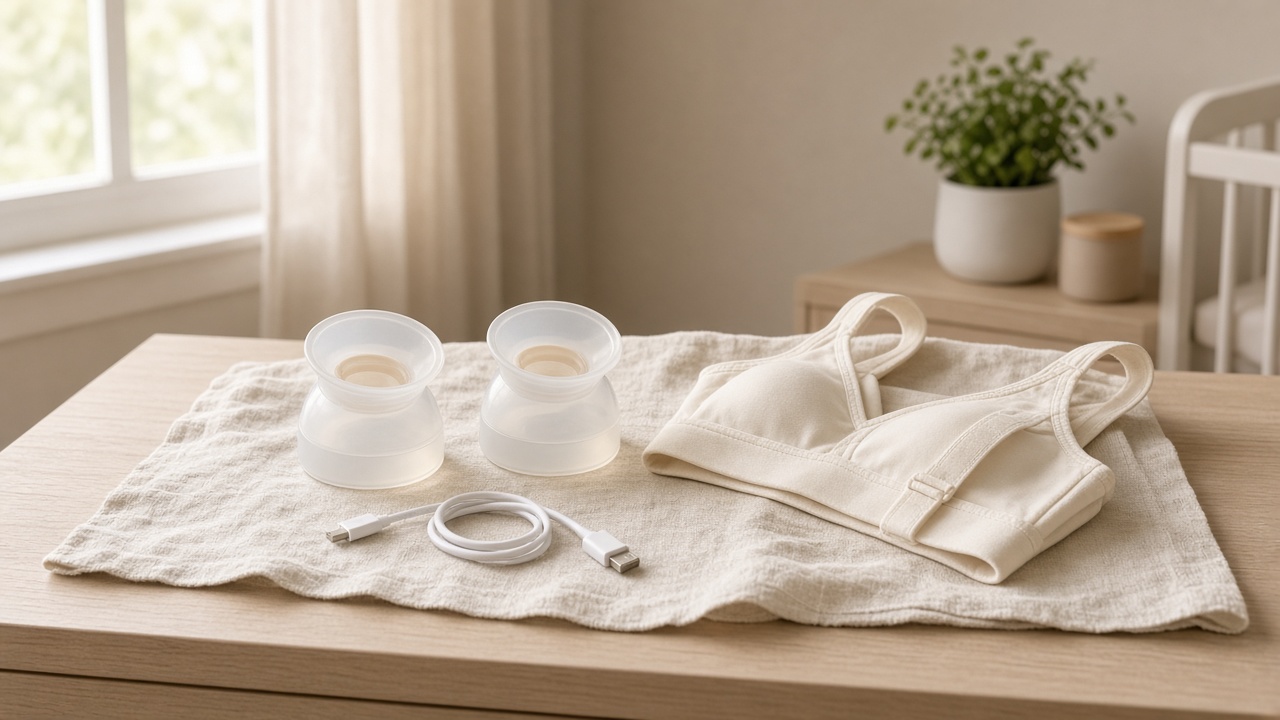
A traditional double-electric pump buys vacuum consistency and loses the hallway. You sit with tubing clipped to a motor, watch a timer, and hope the shared lactation room is empty. Momcozy, launched in 2018 as a femtech company out of Shenzhen under founder Athena Pan, bet the opposite: silicone cups that drop into a nursing bra so a parent can stand, walk, or type while milk collects. That is why the brand now occupies Amazon, Target, Walmart, and Babylist instead of only clinical catalogs. Grand View Research put it at the top of wearable pump share in 2024; the ranking describes sales mix, not medical superiority. The practical question is which family matches your session length.
Wearable cups are not a quieter version of a hospital motor. They are a different machine with a different failure mode. The motor sits on the cup, so weight, flange diameter, and bra tension decide whether you get output or a slow leak down your shirt. Hospital-style systems keep the motor on a table and send vacuum through tubing, which is heavier to pack but easier to hold at a stable angle for a long night shift. Momcozy now sells both ideas under one logo: the M, S, and Wellness wearables for mobility, and the V series, including the plug-in V3 and cordless V3 Pro, for parents who need a workhorse at the nightstand. Treating those jobs as interchangeable is how people waste an insurance benefit on the wrong SKU.
M, S, V, and Wellness are jobs, not a status ladder
Letter families on Momcozy boxes do not mean stronger suction as the price rises. Independent comparisons of current SKUs keep showing the inexpensive S12 Pro Quick near the top of the vacuum chart, while slimmer flagship cups trade a few millimeters of mercury for a thinner profile. The S series is the no-app workhorse: controls live on the cup, battery life is the selling point, and DME partners often fully cover the S12 Pro Quick. The M series adds phone control and, on the M5, a more horizontal pumping angle. Wellness, including the W1 warm-massage wearable, is the comfort-forward line. Air 1 is the ultra-slim cup with a charging case. Pick the constraint you actually have: app logs, heat, thickness under a blouse, or a covered insurance SKU.
The V series is the other job. These motors use tubing to a collector and carry the hospital-grade label Momcozy uses for home-heavy pumping. The V3 is the plug-in nightstand unit; the V3 Pro is the cordless sibling. Published figures put dual-motor suction around 270 mmHg with a long-duty motor aimed at months of daily use, not a two-hour office visit. That is the machine you want if you are building or protecting supply with eight or more sessions a day, or if a wearable keeps slipping when you lean forward. It is also the machine that ties you to a chair unless you buy a wearable as a second pump.
- S series (S9 Pro, S12 Pro Quick): in-bra cups, on-cup buttons, long battery, often the insurance default.
- M series (M5, M6, M9): still wearable, plus app control; M5 is the insurance-friendly smart option on many DME lists.
- V series (V3 plug-in, V3 Pro cordless): tubed hospital-grade motors for home output, not for walking a grocery aisle.
- Wellness / Air: heat-massage W1 and slim Air 1 for parents who will pay extra for comfort or concealment.
- Nursing bras and flanges: the unglamorous SKUs that decide whether any of the above actually seal.
Insurance, Amazon, and the store aisle are three different prices
U.S. plans that cover breast pumps usually cover one pump per birth, routed through a durable medical equipment supplier, not through a random checkout cart. Momcozy lists DME partners on its insurance page; 1 Natural Way, Aeroflow, Babylist Health, and similar firms verify benefits, chase a prescription from a midwife or physician, and ship a covered model. 2024 partner materials treated the S12 Pro as free on many verified plans and the M5 as covered on most of those plans. Upgrade SKUs such as Air 1, M9, or Wellness 1 may require a copay. HSA and FSA dollars often still apply. Call the insurer at about 30 weeks, ask which DME firms are in network, and do not assume the Target box is the same as the DME box.
Retail remains useful when insurance is slow, when you want a second pump, or when you need a nursing bra the DME packet omitted. Amazon, Target, Walmart, and Babylist stock overlapping but not identical catalogs, and open-box flanges are a poor place to save money because diameter is personal. A 24 mm DoubleFit flange with a 21 mm insert is a common starter set on S12 Pro kits; additional sizes exist and are worth ordering before you declare the pump weak. If you already used a hospital pump in a birth unit, write down the flange size the nurse used. That number travels with you more reliably than a brand loyalty argument.
Compare wearable cups and V-series motors on Momcozy’s current catalog before you spend an insurance slot on the wrong family.
See Momcozy pumps →Fit, leakage, and the parts you will replace every month
Output complaints about wearables are often flange complaints. If the nipple rubs the tunnel wall, if areola is pulled too far in, or if the cup tilts when you reach for a toddler, vacuum is wasted as air hiss. Sit for the first three sessions even with a wearable so you can watch the spray pattern and adjust bra tightness. Then stand. If volume drops by a third when you stand, the seal is posture-dependent and you either need a different flange, a pumping bra with more compression, or a tubed V3 for the heavy sessions. Duckbill valves and silicone diaphragms are consumables. Treat them like toothbrush heads, not like lifetime hardware. A silent drop in output after month two is frequently a stretched valve, not a dead motor.
Noise is another fit issue people forget until they join a video call. Wearable cups are quieter than a 2015 wall pump, not silent. Sub-45 dB claims on some Air 1 materials still mean a rhythmic whir next to a laptop microphone. Test with your actual headset before you promise a manager you can pump through standups. Battery charts that advertise 240 minutes assume mixed modes, not maximum vacuum the whole time. Charge on a schedule, and keep a cable in the pumping bag.
Buy Momcozy for the session you cannot sit through. Keep a tubed motor for the session where ounces matter more than walking. The catalog is wide because those jobs conflict.
— Maya Torres
Who should skip a wearable Momcozy and stay on medical-grade equipment
Skip the in-bra lineup if a neonatal team has you on a protocol that specifies a hospital-grade, closed-system rental with documented suction performance. Exclusive pumping for a NICU infant is a clinical workflow: timed sessions, measured output, and motors designed for near-continuous duty. A consumer wearable can supplement once supply is stable and the baby is home, but it is the wrong primary tool when a gram of milk is charted. If low supply, breast surgery, or latch issues already required a lactation consult, ask that consultant before you spend the insurance benefit on a cup optimized for discretion. A hospital rental named by the NICU team should outrank an aisle display, including Momcozy’s own V3.
Also skip a premium upgrade if your plan already ships a fully covered S12 Pro Quick or M5 Smart Core and your only complaint is a slimmer cup in a photo. Copays add up next to bottles, bags, and a nursing bra that actually holds the motor. If you work from home and can sit for 20 minutes, a plug-in V3 may empty you faster than a wearable you fidget with. If you only need an occasional pump for comfort, a simple manual or basic double electric is enough. Momcozy’s breadth is a retail strength and a decision tax. Narrow the job before you narrow the color.
- At 30 weeks, call insurance, ask for in-network DME names, and request the covered Momcozy SKU list in writing.
- Get a prescription that names a breast pump; midwives and primary-care clinicians can usually write it.
- Measure or reuse a known flange size before the first paid order; do not guess from a photo of a cup.
- Decide whether the insurance slot is for mobility (wearable) or for nightstand volume (V3), not for both unless you will self-pay the second unit.
- Budget replacement valves, extra cups if you pump at work, and a pumping bra as part of the pump cost.
- If a NICU team issued a rental motor, keep it as primary until they discharge the protocol.
Frequently asked questions about Momcozy pumps
Will U.S. insurance actually pay for a Momcozy wearable?
Often yes for at least one model, and often no for the model in the Instagram still. Coverage is plan-specific and usually capped at one pump per birth. DME partners currently treat S12 Pro Quick and M5 Smart Core as the no-copay workhorses on many verified plans, with Air 1, M9, and Wellness 1 as upgrades. The partner, not Momcozy’s marketing site, decides after it reads your benefits. Start there rather than at a paid Amazon listing if you want the insurance price. Keep the confirmation email; it is the document a claims office will ask for if a box arrives and a bill follows.
Is the V3 the same as a hospital rental?
No. Hospital-grade in retail language means a durable, high-duty motor with strong vacuum, not that a biomedical tech signed off on it for a specific NICU protocol. The V3 and V3 Pro are Momcozy’s plug-in and cordless tubed systems, rated around 270 mmHg with dual motors. They are the right home upgrade when wearables underperform on long sessions. They are not automatic substitutes for a closed-system rental your neonatology team already specified. If that team named a brand, follow the name until they change it. You can still add a Momcozy wearable later for mobility once medical constraints loosen.
Can I use a wearable at a desk without colleagues noticing?
Sometimes, if the bra holds the cup, the blouse has ease, and you accept a faint motor sound. You will not hide a pumping session from someone sitting beside you on a silent call. You can hide it from a hallway if you stay seated and avoid reaching. Practice at home in the clothes you actually wear to work. If the cup prints through a knit, you need a different bra or a different cup thickness, not a stronger vacuum setting. Discretion is a clothing problem first and a pump problem second.
What if I already own an S-series cup and supply is slipping?
Replace valves, recheck flange size, and add a scheduled sitting session with a tubed motor before you buy a new wearable family. Supply drops have mechanical causes and medical causes. The mechanical list is cheap to test. If output is still down after new valves, a measured flange, and a week of consistent timing, call a lactation clinician rather than chasing the next letter in Momcozy’s alphabet. A V3 at home plus the S cup at work is a coherent two-pump strategy. Three overlapping wearables is not.
Where Momcozy earns a slot in the bag
Momcozy earned mass retail because it made an in-bra pump available next to diapers, not only next to a DME fax form. That distribution is the real product for a lot of families: you can replace a cup on a Tuesday without waiting on a benefits check. Use that convenience for the wearable job. Use insurance for the SKU your plan will actually fund. Use a hospital-grade motor, Momcozy’s V3 or a clinician-directed rental, when ounces outrank walking. Read the letter on the box, not only the listing photo.
Check current M, S, V, and Wellness models on Momcozy before you lock an insurance or retail order.
See Momcozy pumps →