The packing slip that almost ate a refund
The first thing that went wrong was almost a stamp. I had the JW PEI packing slip on the kitchen counter on 27 September 2026, and the outbound address sat there in plain type: 1477 E Cedar St, Unit E, Ontario, California 91761. It looks like a place you could send a bag back to. It is not. That building is a fulfillment node. The brand says parcels dropped at that door without a return ticket do not get processed. I caught myself filling a label before I opened the help page. That is a stupid way to lose ninety-nine dollars.
Yang Pei and Stephanie Li started JW PEI in Los Angeles in 2018. Say the letters J-W, then Pei. Their about page talks about sculptural, animal-free accessories. Most handbag cards still stamp the word imported, and nobody publishes a walk-through of the workshop. One Taiwan shipping page has shown a Guangzhou depot, useful as a routing hint and useless as a full supply story. Ontario shows up on US slips because that is an outbound box point. Hide is not finished there. Returns are not accepted there.
The shop now sells shoes and, since 2024, a little ready-to-wear. What built the name is still a compact structured handbag with gold-tone or silver-tone hardware and a pebbled or croc-embossed face. Knockoff versions of the ruched Gabbi shape turn up on marketplaces, which is a dull reason to pay on the official site. Prices on the main shop, the day I checked, often sat between about sixty-seven and one hundred forty-nine dollars. That is not hide money. It is also not a reason to skip the centimetre line.
Gabbi looks like a day bag. The tape says otherwise.
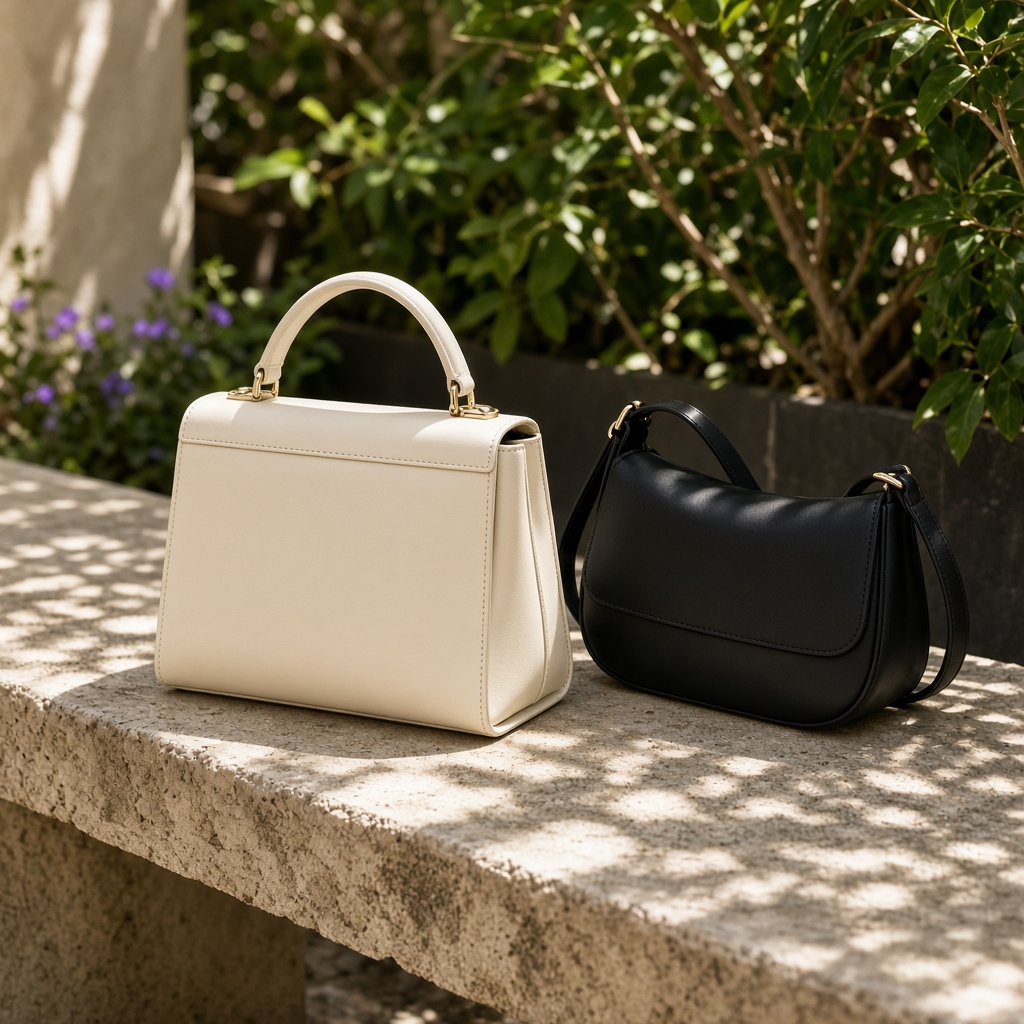
Gabbi is the ruched hobo people save to a board. It measures about 24.5 by 13 by 6 centimetres. Six centimetres of depth. The brand says a big phone goes in. A bottle and a library book usually do not. The strap is fixed: you cannot lengthen it or unclip it, and the drop sits around 17 centimetres. One interior pocket is the entire filing system. Magnetic snap. Soft slouch. Pretty in a hallway photo. Useless if Monday includes a transit bottle and a library book. Read the centimetres.
I keep saying it is a phone bag because shoppers keep treating it like a tote. It is a phone bag. Keys, a thin card case, lip balm if you are lucky. Capacity notes often boast that a current oversized handset slides in. That test is about a phone. It is not about a tablet. If your daily kit already fights a similar 24-by-13-centimetre pouch hanging on a hook, buying a second one in croc will not invent room.
The other named bag I will allow in this piece is the Maya Envelope, because people bounce from Gabbi to the next screenshot without comparing depth. The envelope sits about 25.5 by 15 by 9.5 centimetres, with a zipper plus a slip pocket and a fixed shoulder drop near 27 centimetres. About one hundred nineteen dollars on the pages I opened. That extra depth is the difference between a card case and a compact day kit. If you need a 13-inch laptop shopper, you are in another aisle.
Deeper top-handles and taller rectangles exist on the same shop. I am not going to roll their names into a catalogue. Open the live card. Hold your phone and wallet against the listed width and depth. Check the closure if you ride a bike: magnetic snaps, turn-locks, and flaps are not interchangeable against a handlebar. If a color is on preorder, add the stated restock wait to the usual one-to-two business day processing window. On 27 September 2026 some envelope shades sat on preorder while others were unpublished. I will not invent a ship date.
The skin is a coating. Captions keep calling it a plant.
Nothing in the current cards is animal hide. The main face is vegan leather, which at these prices is a polyurethane film on cloth, pebbled on some styles, croc-stamped on others, smooth on a few. Linings run polyester, more vegan leather, or faux suede. Some listings name recycled plastic bottles in the textile. Stephanie Li has talked about certified bottle fabric and a wish to raise recycled content. None of that makes the object compostable. The coating is still a plastic film. It will not pick up the slow shine of calf. Corners can craze after hard years. A light splash beads better than raw canvas, but these are not sold as storm gear. That is a material limit, not a surprise.
I opened the two bags above and the other core shapes on the same grid looking for a cactus-panel claim. It was not there. If a caption swears the brand is cactus, wait until the spec sheet agrees. Darker faux suedes can rub color onto a coat. The embossed scale can shift from panel to panel. Hardware is usually gold-tone, silver on a few styles. Recycled-bottle linings, where named, are a textile claim, not a garden promise. Write the desk if you need a fibre percentage. Do not take a fifteen-second clip over the bullet list.
Open the two cards, set your phone and wallet next to a ruler, and believe the depth line before you pay.
Check Gabbi and Maya Envelope measurements on the official shop →Who this label is actually for
Buy here if you refuse animal hide, want a drawn silhouette under typical designer money, and will treat the coating as something that wears out. Buy Gabbi for evenings and light errands, or the Maya Envelope when you need a zipper and a little more depth, and retire the piece when the corners tire. Start with a full-price color so a return is still possible. Final-sale shades from a phone screen are a poor first order. Keep tags on through the first real day of carrying.
The honest customer wants an animal-free bag that photographs clean, sits under one hundred fifty dollars, and does not pretend to be a bridle tote. She reads the return line before the hardware shine. He will not mail the box to Cedar Street. If that is you, the shop makes sense. If that is not you, keep walking. The mismatch is cheaper to admit in the cart than after the unused window closes.
Who should close the tab
Pay for real leather if you want a bag a cobbler can condition and recraft for ten years. Polyurethane does not take saddle soap the same way. The film can flake where the bag scrapes a desk. Pay for hide if rain, a heavy laptop, and daily strap wear are the job, or if resale value sits on your list. JW PEI is the wrong counter for that brief. It is the right counter for a sculptural, animal-free accessory you will not ask to become heirloom leather.
- Skip if you need a laptop tote, a cobbler who can recraft the face, or a bag you expect to last a decade.
- Skip if you want plant leather and the live spec still does not name it.
- Skip a final-sale or clearance color if you are unsure how the croc print sits next to your coat.
- Skip standard post if you need the bag in hand for a date ten days out. A three-to-twenty-five-day range is not a wedding plan.
- Skip if you will not open a return ticket and will try to leave a box at the Ontario warehouse instead.
- Leave money for import charges if you are paying from Britain, the EU, Canada, or Australia. Those invoices are not JW PEI’s.
Treat JW PEI as a measured, animal-free fashion buy. Do not treat it as a plant-hide story, and do not ask Gabbi to do the work of a cobbler’s tote. If Monday does not fit in six centimetres, the Maya Envelope has more room. If that still fails, leave the cart.
— Maya Torres
How the checkout actually behaves
I pulled the live shipping table on jwpei.com on 27 September 2026. Inside the United States, the free-shipping line sat at two hundred dollars. Some Middle East checkouts used one hundred fifty-nine dollars. A lot of other countries used one hundred twenty. Below the line, a standard charge shows up before you pay. In-stock orders usually sit one to two business days in processing. A preorder waits for its restock date first. US cards then quoted three to twenty-five business days in transit. The policy names national posts, including USPS, Royal Mail, and La Poste. Stock can leave more than one warehouse, so you may get two boxes and still pay only one outbound fee.
A mistyped street is on you. If the box comes back, the brand says that failure is yours. Write customer@jwpei.com the minute you pay if the apartment number is wrong, not after the label exists. UK regional pages I opened listed a standard fee of nine pounds ninety and transit of three to fifteen business days. Those regional numbers are not a vow that the US domain will match them. Always read the table on the domain you are actually paying on. The only binding figure is the one on the confirmation email.
- United States: free shipping above two hundred dollars; a single Gabbi at about ninety-nine dollars sits under that line.
- Many international checkouts: free shipping above one hundred twenty dollars, unless the live table says otherwise.
- Some Middle East checkouts: free shipping above one hundred fifty-nine dollars on the day I looked.
- United Kingdom regional site: standard postage around nine pounds ninety, transit often three to fifteen business days.
- Import charges: the buyer pays them on Australian, Canadian, British, EU, and other cross-border lanes.
- Split shipments: two boxes can arrive from two warehouses without a second outbound fee.
Freight, duties, and the email that saves a street
Here is where I got stuck, and where I still get a little sharp. The three-to-twenty-five-day window — I find that range irritating when a wedding is already on the calendar — is a range, not a courier promise. If you need the bag for a Saturday ten days out, do not lean on the slowest day in that range. Use a faster service when checkout shows one, or pick a color a city store already holds. And that is before a customs invoice shows up after the box lands. Customers, not JW PEI, cover those duties. If a bill arrives with the carrier, it is yours.
Split boxes are not a punishment. They are a stock-room fact. One order can leave Ontario and another node, land two days apart, and still count as one outbound charge. Track both. If you typed the apartment wrong, write customer@jwpei.com immediately. Waiting until the first scan is how people refresh a tracking page that will never reach the buzzer. I am repeating myself on purpose: the address you typed is the address they will use.
Thirty unused days and a door that refuses parcels
You have thirty days from the day the bag arrives. It has to be unused, tags still attached, original packing still with it. Clearance and marked-down pieces stay final sale. The inbound stamp is usually yours, and it does not come back on the credit. Open a ticket in the account or write customer@jwpei.com before you tape anything. A box sent with no ticket, or sent collect-on-delivery, gets refused. Once it is moving, the policy wants tracking inside forty-eight hours. The refund is the merchandise line on the invoice, not the postage either way.
The Ontario street on the packing slip is explicitly not a returns dock. Drop a Gabbi at that unit on your own and the company says the credit will not run. That warning exists because people search the warehouse and aim a parcel at it. Use the slip they email you. Photograph the color in daylight for your own notes if you want, but the rule is unused condition, not a debate about dye lots. First purchase? Pick a full-price, returnable colorway until you know how the grain looks next to your coat.
Order a full-price bag so a return is still possible, leave the tags on until you have actually carried it, and ignore Cedar Street for returns.
Shop a returnable JW PEI colorway →FAQ: questions people ask at the pay button
Is JW PEI plant leather or a plastic coating?
On the cards I opened, the face is vegan leather. A few add bottle-based textiles, polyester linings, or faux suede. Read that as polyurethane plus cloth, with recycled PET only where the listing writes it. Cactus, pineapple, and apple hides are not on those cards. If you came for a plant hide, stay on the exact listing. Unpublished is unpublished. A social caption does not fill the gap.
Will Gabbi hold a bottle and a paperback?
Not with six centimetres of depth and thirteen of height. Gabbi takes a phone, a thin card case, and keys. A hard bottle fights the slouch. A thin paperback can work in one angle and fail in the next. If you want a zipper and more room, that is the Maya Envelope. Or wear a backpack and save Gabbi for nights. Believe the tape.
Can I count on standard post for a wedding in ten days?
I would not. US cards showed three to twenty-five business days depending on where you live. That upper number will ruin a Saturday. UK regional transit ran three to fifteen business days on the pages I opened. Preorder colors add a restock date before processing even starts. If the event is already on the calendar, pay for a faster service when the table offers it, or pick another bag.
The color is wrong in daylight. How do I send it back?
Put it down. Leave every tag attached. Open a ticket so the desk can send return instructions while you are still inside thirty unused days. Use the original box, skip collect-on-delivery, and pass them tracking within forty-eight hours. Plan to cover the inbound stamp yourself. Markdown colors stay sold. Do not address the parcel to Cedar Street. Wait for the ticket. The form, once it arrives, is clearer than the packing slip.
Does a ninety-nine-dollar Gabbi ship free in the United States?
On the day I checked, no. One Gabbi at about ninety-nine dollars sits under the two hundred dollar free-shipping line, so expect a standard shipping charge unless a live promo wipes it. A pair of bags can push you over two hundred and cancel that line. Outside the US, a one hundred twenty dollar or one hundred fifty-nine dollar threshold may apply, plus whatever the carrier collects at the border. Those were the tables on 27 September 2026. Your confirmation is the number that counts.
Who pays if customs sends a bill after delivery?
You do, wherever the policy pushes import charges onto the buyer, including Australia, Canada, Britain, and the EU. JW PEI does not absorb those invoices. Add a duty cushion before you call the bag cheap. A ninety-nine-dollar face price plus postage plus a customs charge is a different object than the number on the product card. If that math bothers you, buy inside a region that already stocks the color.
What happens if I mail the parcel to the Ontario warehouse anyway?
They say the credit will not go through. The Cedar Street unit is printed because outbound stock leaves there, not because returns staff wait at the dock for surprise boxes. Open the ticket. Use the label they send. Put the tracking number in within forty-eight hours. I almost skipped it. The packing slip made the warehouse look official enough to trust. Official for outbound is not official for inbound.
Buy the centimetres. Leave the myth in the comments.
If you can live with a polyurethane face and a small interior, JW PEI is a legitimate Los Angeles accessories label that ships imported bags through Ontario. Gabbi is the ruched evening shape. The Maya Envelope is the one with a zipper and more depth. Walk away if you came for hide, cobbler work, or a plant leather the spec sheet still does not name. Pay full price so the thirty unused days apply, keep Cedar Street out of the return app, and leave room in the budget for a customs bill. That is the sale the product page can actually support.