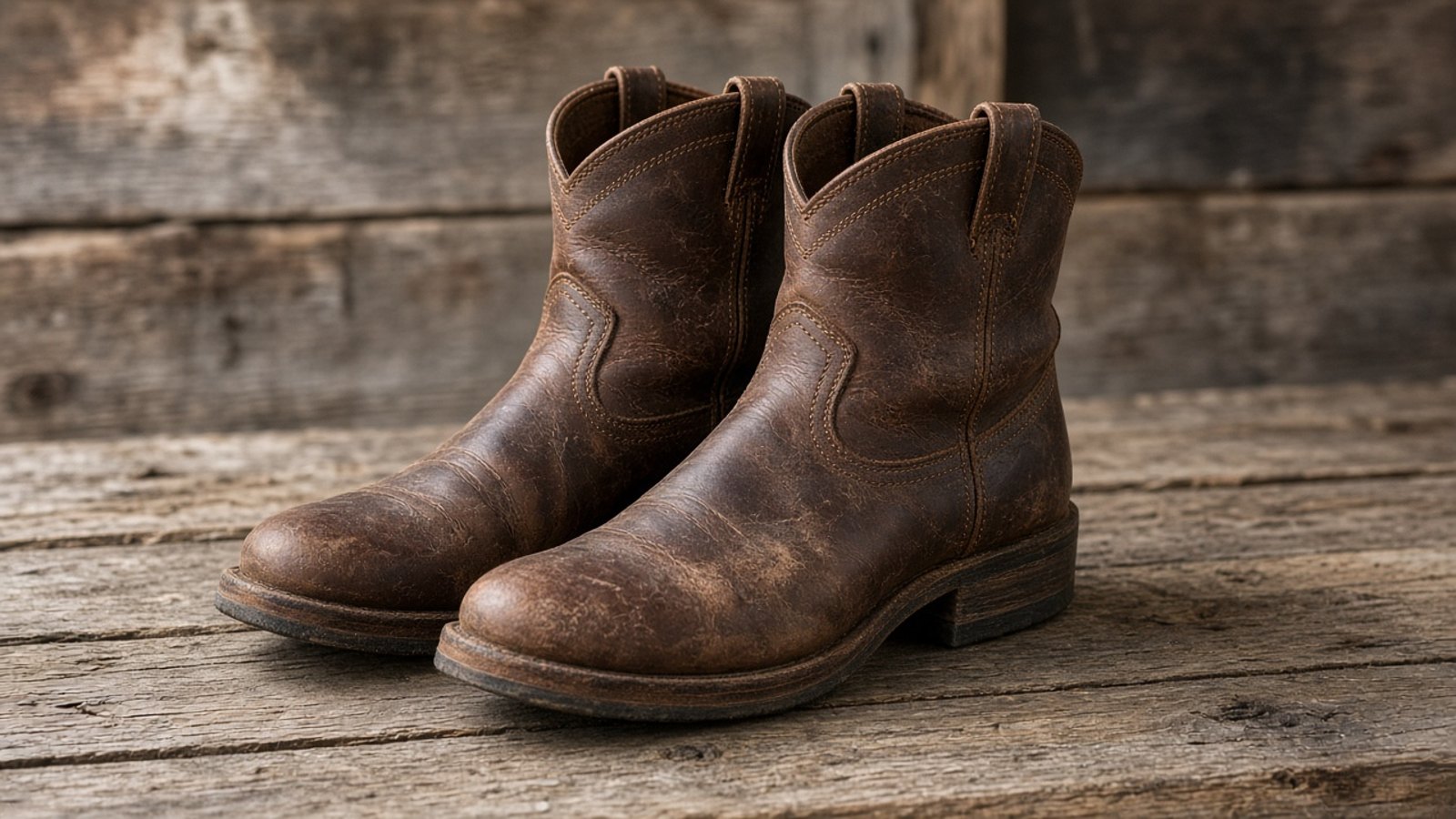
The boot has a job, and new leather has a break-in
I opened ariat.com to look at boots, not at a lifestyle. The public description calls Ariat performance footwear and clothing, and it points at western, work, English, and outdoor. That is four jobs sharing a logo. A western boot for a saddle, a work boot for a site, an English boot for a different saddle entirely, an outdoor boot for walking where a clog would be a joke. I am not going to pretend one last covers all four.
Clothes are on the same site. I am leaving them aside except to say a shirt does not tell you your boot size. The article is the boot: how it fits, how new leather behaves for the first wears, and why the pair you work in should not be the pair you need to keep clean. I did not order, so price, width availability, and the return window stay unpublished.
On 17 October 2026 the useful page is the one for the exact boot, with the size, the width if they offer one, and a sentence about what the sole is for. A homepage that says western and work in one breath is a menu. The menu is not a fit.
Work, show, or a different horse entirely
Buy a work pair if the day involves dirt, water, repeated hours on your feet, and a sole you are allowed to ruin. Buy a show pair if the leather has to stay presentable and you will not wear it to feed. Buy English if you ride in that tradition and you already know a tall boot is a calf measurement, not a guess from your jeans. Buy outdoor if the path is the job and a slick fashion sole would be rude to the hill. These are different carts even when the brand is the same.
It fits someone who will measure both feet, wear the sock they ride or work in, and accept that new leather boots often need a break-in. You can stand a few short wears. You will not take a brand-new show boot into a full day of mud to see. You will read whether the work boot has the safety toe your site actually requires. I will not assume it does. A western look is not a safety rating.
Leave if you want one pair to do the barn and the photograph. Leave if a clinician told you to wear a specific device and you hoped a boot brand was that device. Leave if you refuse to read a width. Western boots in particular are a width problem wearing a decorative shaft.
- You want one pair to work in the mud and stay show-clean.
- The job requires a safety toe and the page does not claim one.
- You will not measure, including the calf on a tall boot.
- You plan to break them in by destroying the sole, then return them.
If the job is clear, the fit notes on that boot are the next page. A general love of the brand is not a size.
Read size, width, and the sole's job on ariat.com before you add a second pair.
Open the Ariat boot you would actually wear →Fit, then the first short wears
Measure both feet in the sock you will wear with the boot. Longer foot wins if the page tells you to order that way. If the page is silent about uneven feet, the rule is unpublished and you should not let a forum invent it. Write the measurement down. A boot you owned five years ago is not a measurement. Feet change. Socks change the fit more than people admit, especially a thick work sock inside a western boot.
Width is the line western buyers skip because the shaft is more fun. If the style offers widths, choose one on purpose. A narrow heel in a wide boot will slip. A wide foot in a narrow boot will make you hate the brand for a week and then hobble. If the style does not offer a width, say so to yourself. The omission is unpublished information, not a promise that the last is average. On 17 October 2026 I would rather you abandon a pretty shaft than ignore a width menu.
English and tall outdoor boots need the calf. A shaft that will not close, or a shaft that gapes, is the wrong boot no matter how the foot feels. Measure the calf where the top of the shaft will sit, and compare it with the page. If they do not print a calf range, that range is unpublished. Do not buy a tall boot on vibes. A zipper that barely closes will fail on a cold morning when the leather is less willing.
Break-in is real and it is not a full day of work. New leather can be stiff. A little movement at the heel can be part of a new boot settling, and a boot that falls off or folds you into a blister in an hour is the wrong size. I am not giving you a millimetre of acceptable slip. Their fit note, if they print one, wins. Short wears, thick enough socks, then a longer day. Do not do the longer day in a show pair you still might return.
The clean pair and the ruined pair are different spends
No price. Work boots and show boots can sit far apart, and I will not invent the gap. On 17 October 2026 compare the basket for the pair you will destroy with the basket for the pair you must keep clean, after the address, as two separate ideas. Buying the show pair because it was the one on sale, then wearing it to work, is how you waste both the leather and the return.
Soles scuff in a driveway. That scuff is used. I do not have their return window. Try the boots on indoors, on a clean floor, with the right sock. Walk enough to feel the heel and the toe. Do not take them outside. If you need a half size or a different width, you want the policy on your side, and a muddy sole spends that policy. Keep the box. A boot without its box is harder to send and I have not seen a rule that says otherwise.
A safety toe, a waterproof claim, and a puncture-resistant sole are job features with job prices. Read them on the work boot's page. If your site requires a rating, the page has to state the rating in the language your site uses. Western stitching is not that language. If the rating is missing, the boot is not your safety boot, however serious it looks. Pay for the rated pair or do not wear it to that site.
- Measure in the sock you will actually work or ride in.
- Pick a width on purpose when the page offers one.
- Keep the first try-on indoors so the sole stays new.
- Buy the rated work boot if the site requires a rating.
Break-in is not a rescue
I did not stand a twelve-hour shift in an Ariat boot, ride in their English pair, or soak a waterproof claim until it failed. Break-in stories online are other people's feet. Your blister is your size, your sock, or a last that is wrong for you. Short wears will tell you. A heroic first day will only tell you that you are hurt.
A boot will not treat a foot condition. If you need an orthotic, ask whether it fits this boot before you assume the footbed comes out. I did not pull a footbed. Some do, some do not, and the page should say. If it does not, that fact is unpublished. Do not cut a footbed to force a device and then expect a return.
Work and show have to stay two pairs if both jobs exist in your week. The work pair gets grease, mud, and a sole you stop caring about. The show pair stays clean and gets worn for the hours it was made for. Using the show pair as the work pair, because the work pair is still in a box, is how both pairs end up average. Outdoor boots are a third sole. Do not take a slick leather outsole up a wet slope because the shaft looked the part.
I would buy Ariat as a work pair or as a show pair, not as one boot doing both, and only after the width and the calf were read. I would not break a new boot in by ruining the sole and then asking for the money back.
— Priya Nair
Fit questions the shaft will not answer
How much should the heel slip at first?
I will not give you a measurement. Read their fit note. A little movement can be part of break-in. A boot that falls off or hurts within an hour is the wrong size. Short wears, indoors, until you know.
Are western, work, and English the same size?
No. They are different lasts. Measure for the boot you are buying. A width on a western boot and a calf on a tall English boot are separate facts. Jeans are not a measuring tape.
Is a western boot a safety boot?
Only if that page states the safety rating your site requires. Stitching is not a rating. If the line is missing, it is missing.
Can I wear them outside and still return them?
Assume scuffs and mud count as worn. I did not copy the window. Try them on a clean floor and keep the box.
Will the leather stretch enough to fix the wrong width?
Do not buy the wrong width and hope. Break-in softens leather. It is not a plan for a boot that is already too narrow or too loose. Exchange while the sole is clean, if the policy allows.
Two jobs, two pairs, short first wears
Name the job, open that boot, read the width or the calf, and try the pair on indoors in the real sock. Wear it for short spells until the leather makes sense. If you also need a clean pair, buy the clean pair as its own order and do not feed in it.
On 17 October 2026 the price and the return window were unpublished, which is fine. The part that was already knowable is the split between work and show. A brand that sells both is not promising that one pair can be both.
Read width, calf, and any safety rating on ariat.com before you wear a new pair outside.
Check the Ariat boot for the job →